
Theme/location exploration and research
Planning and conceptualisation
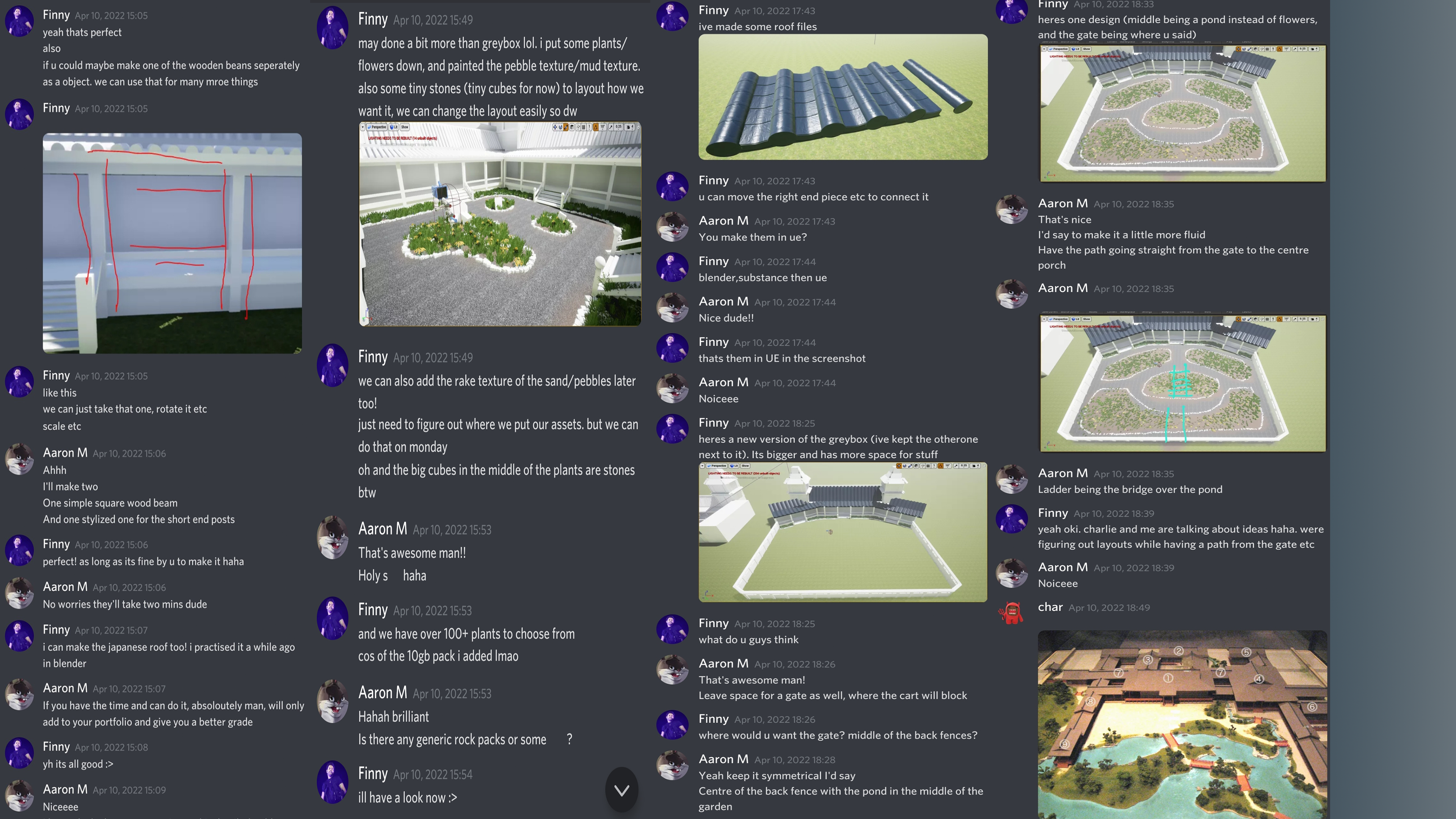
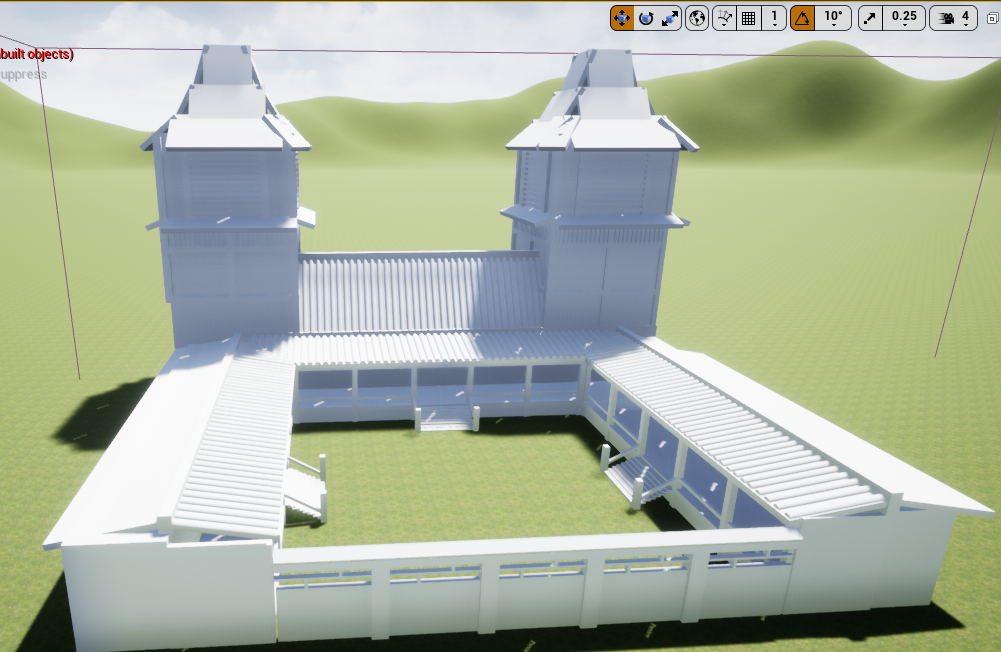
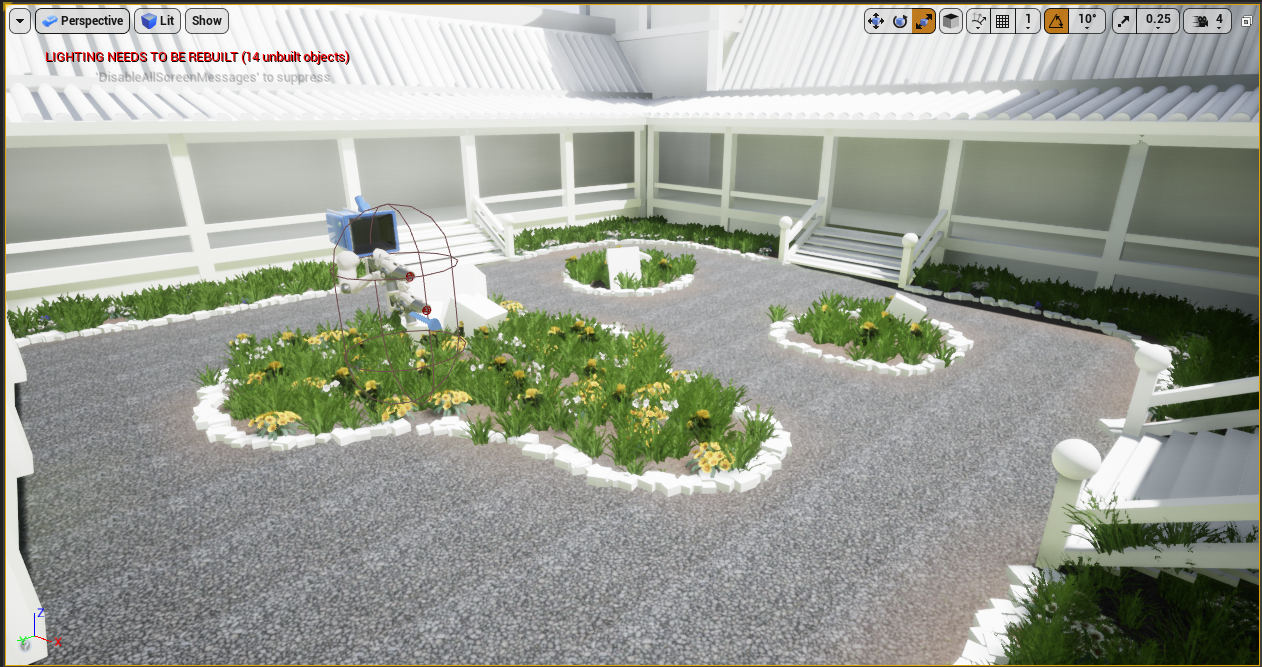
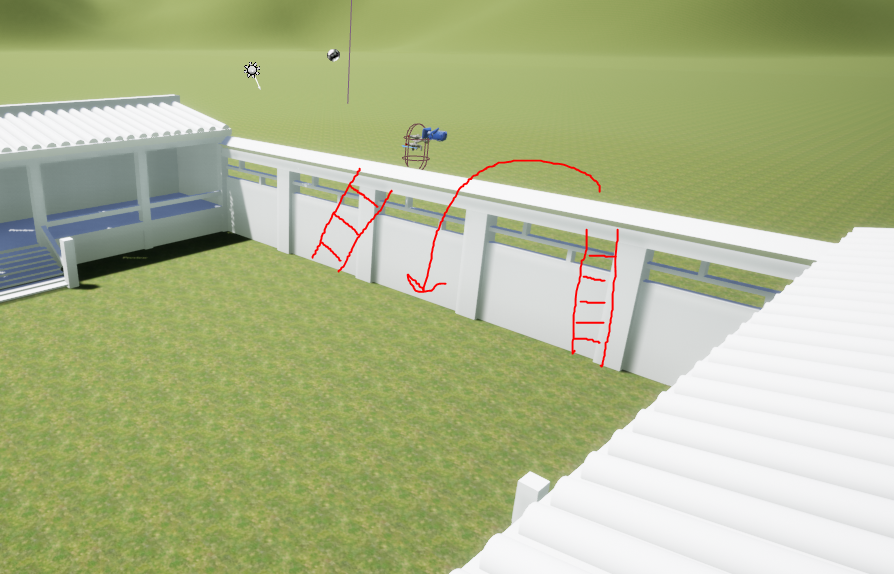
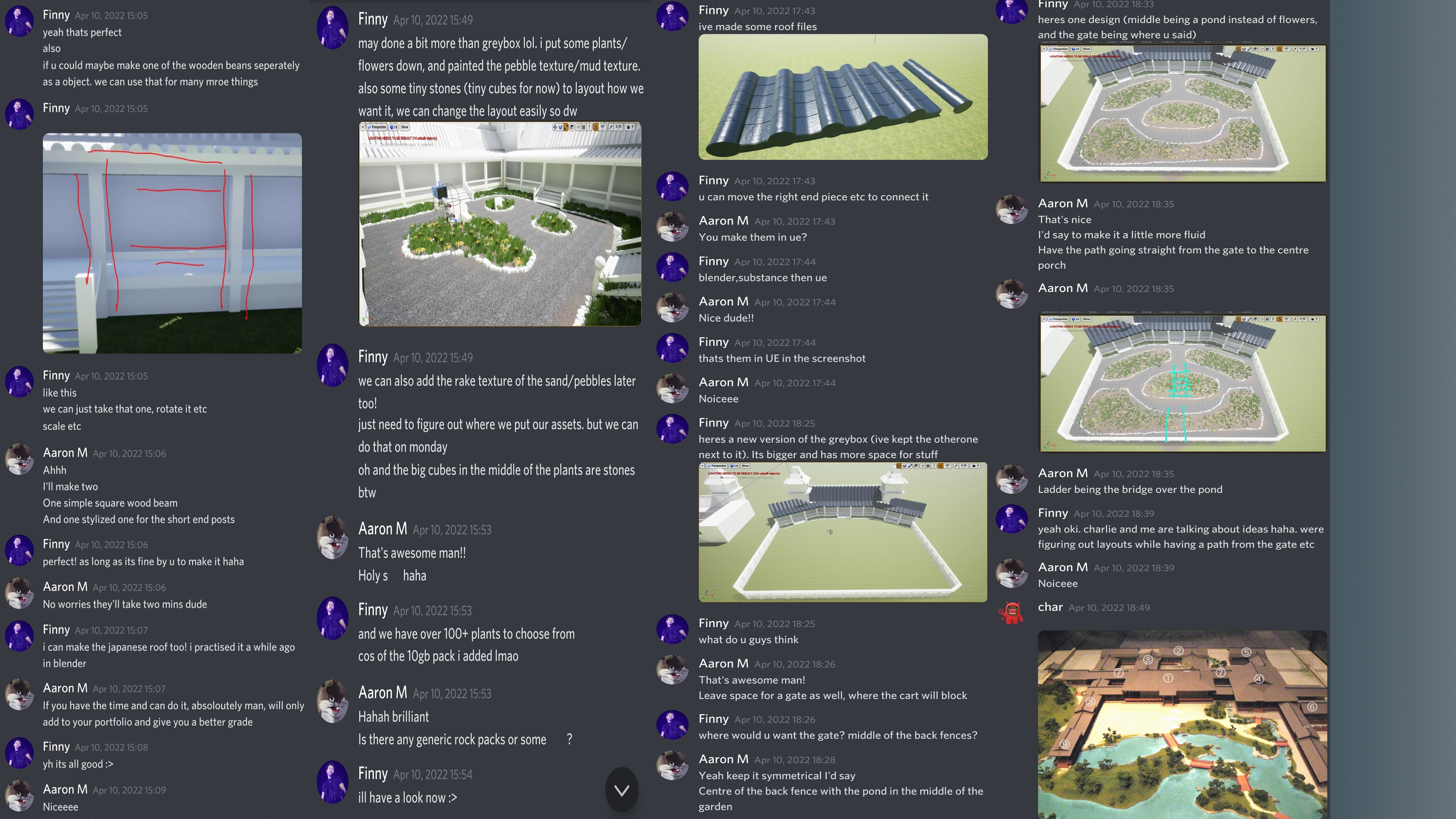
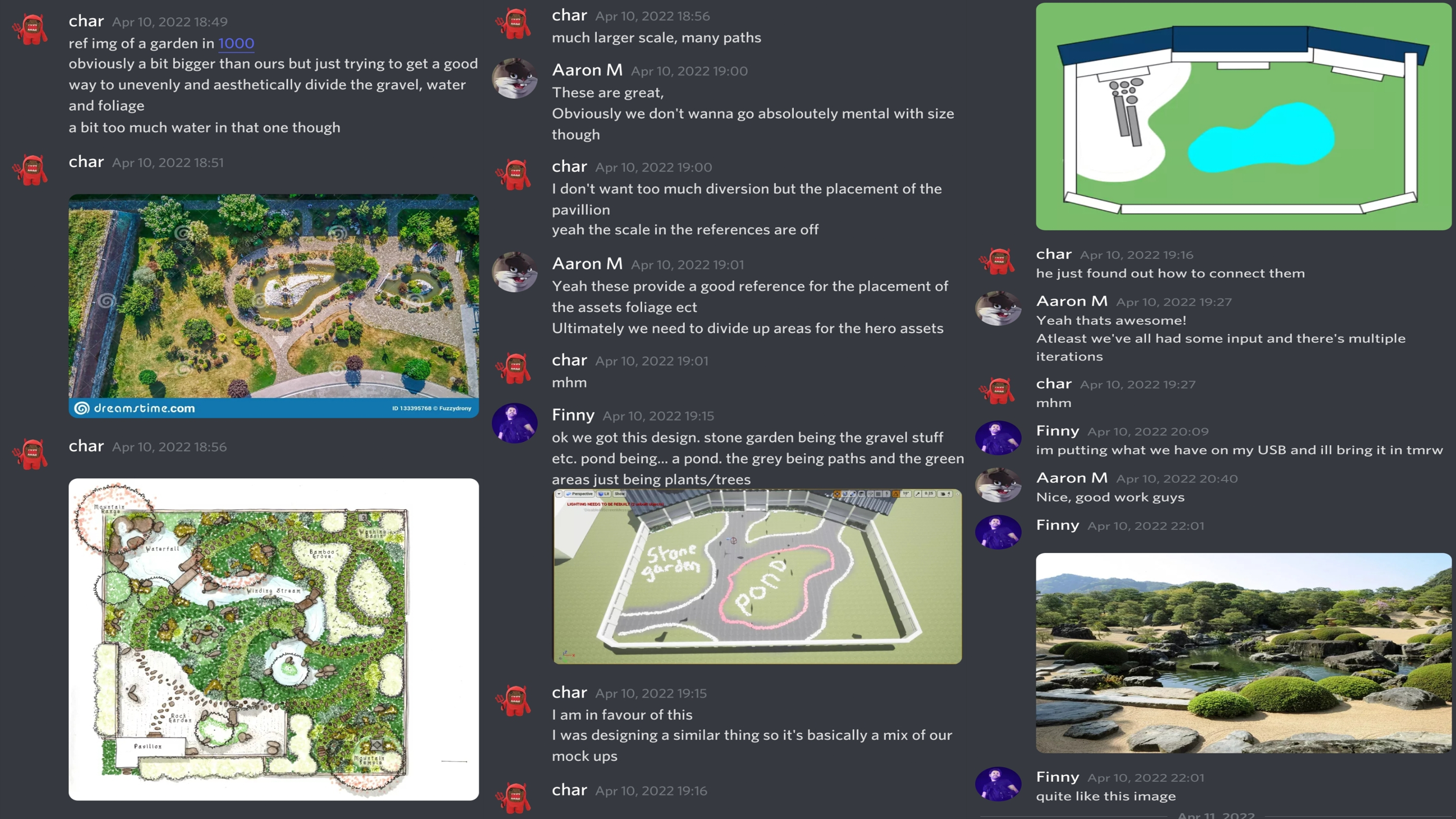
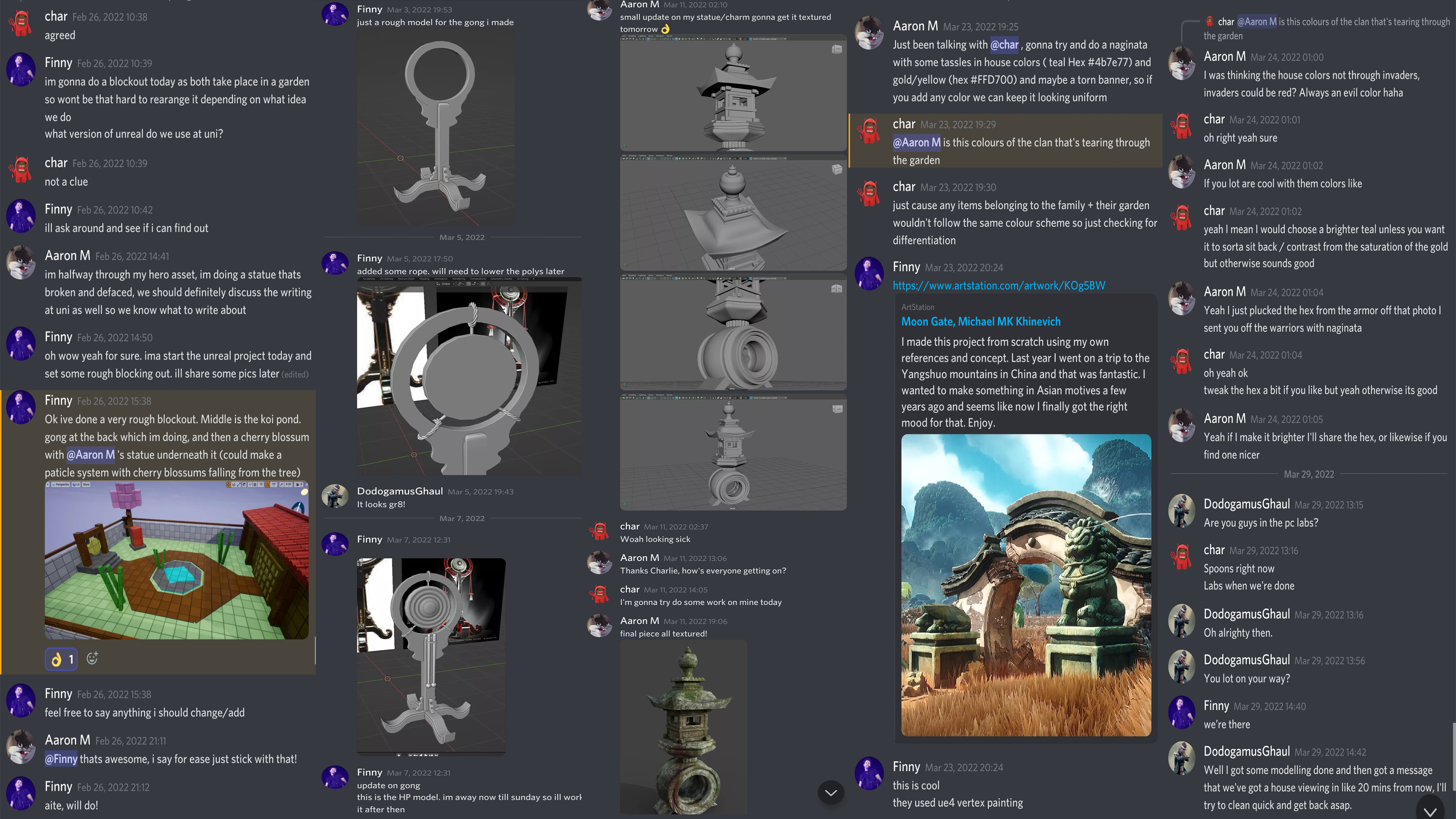
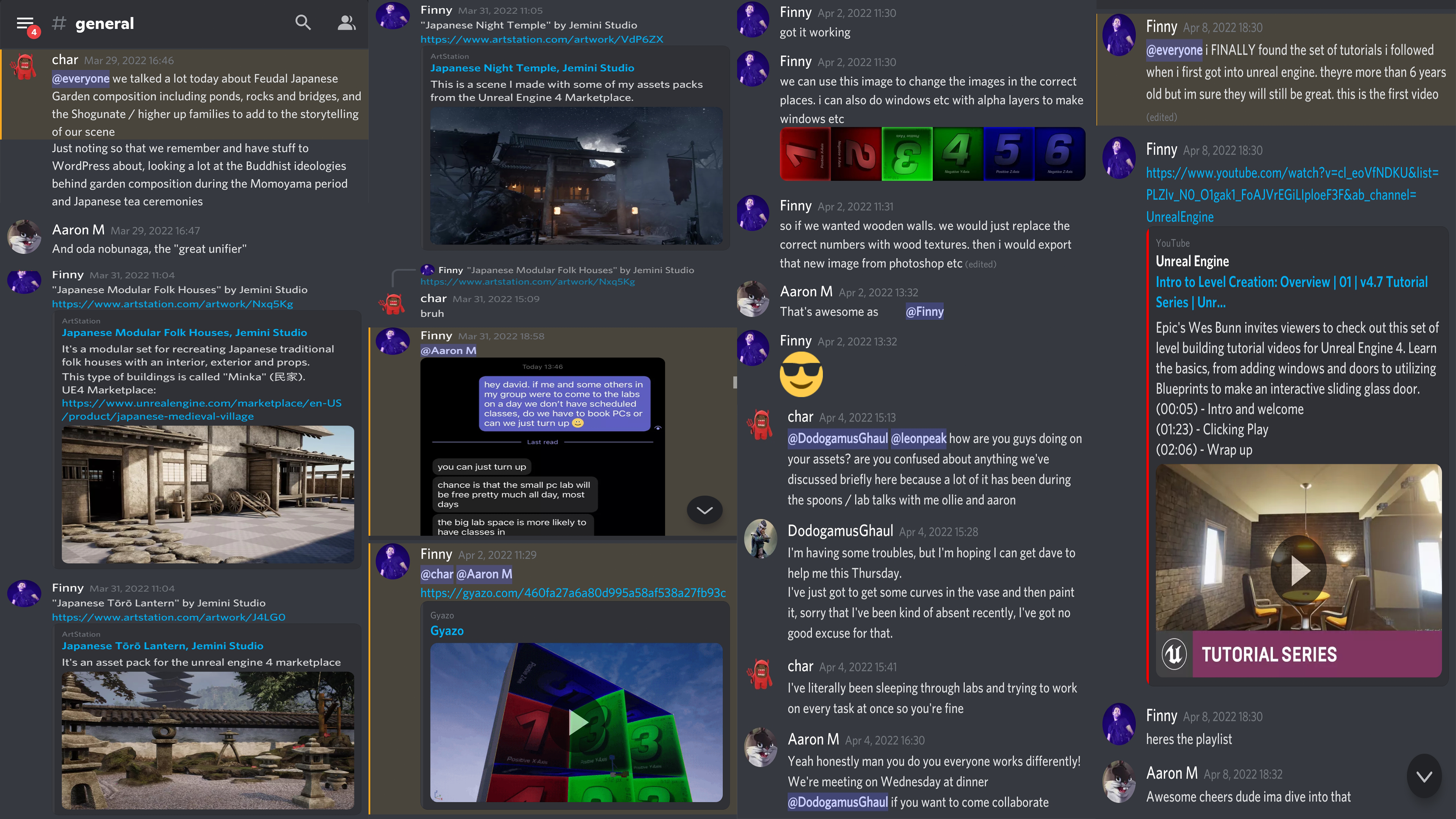
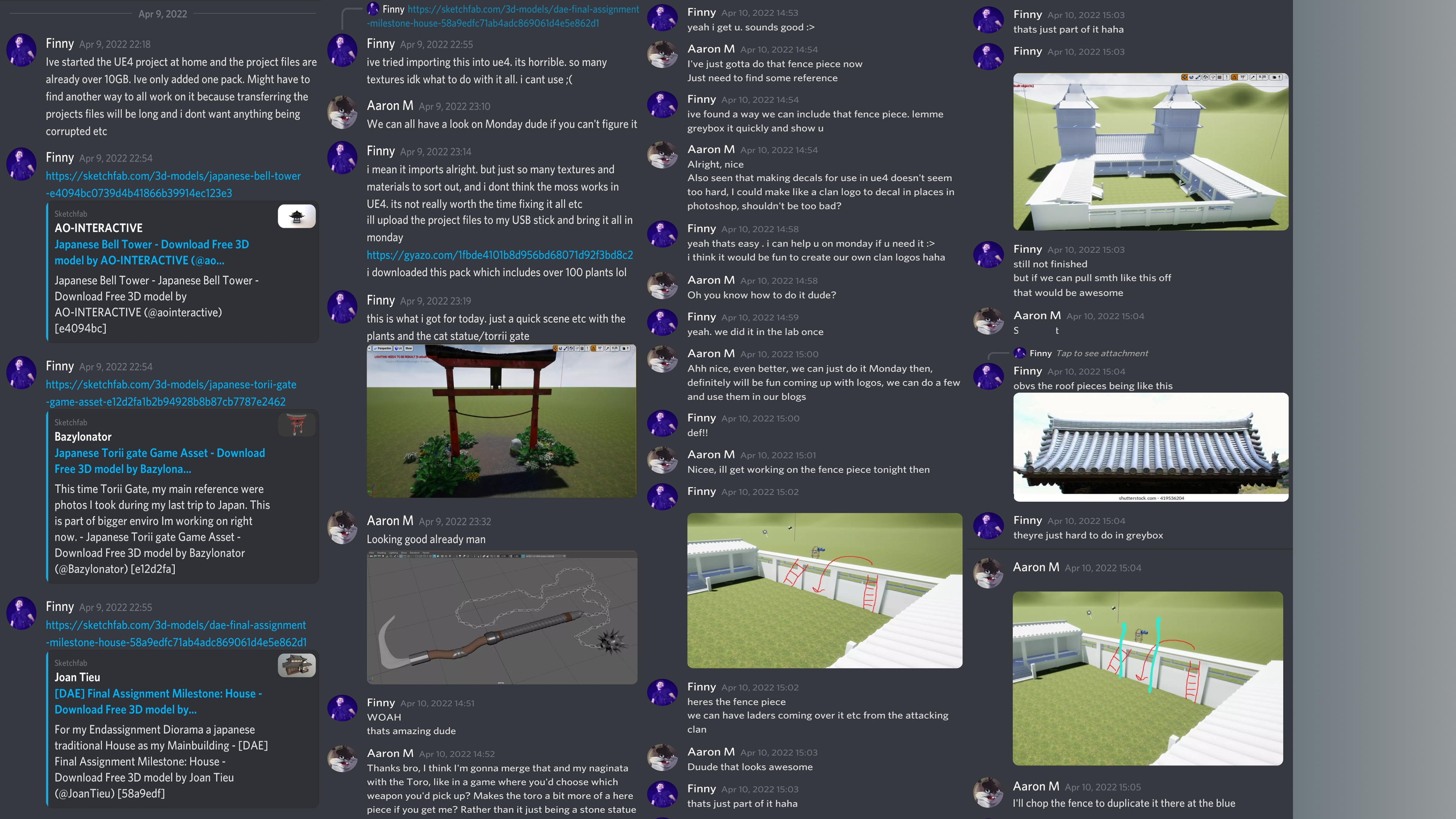
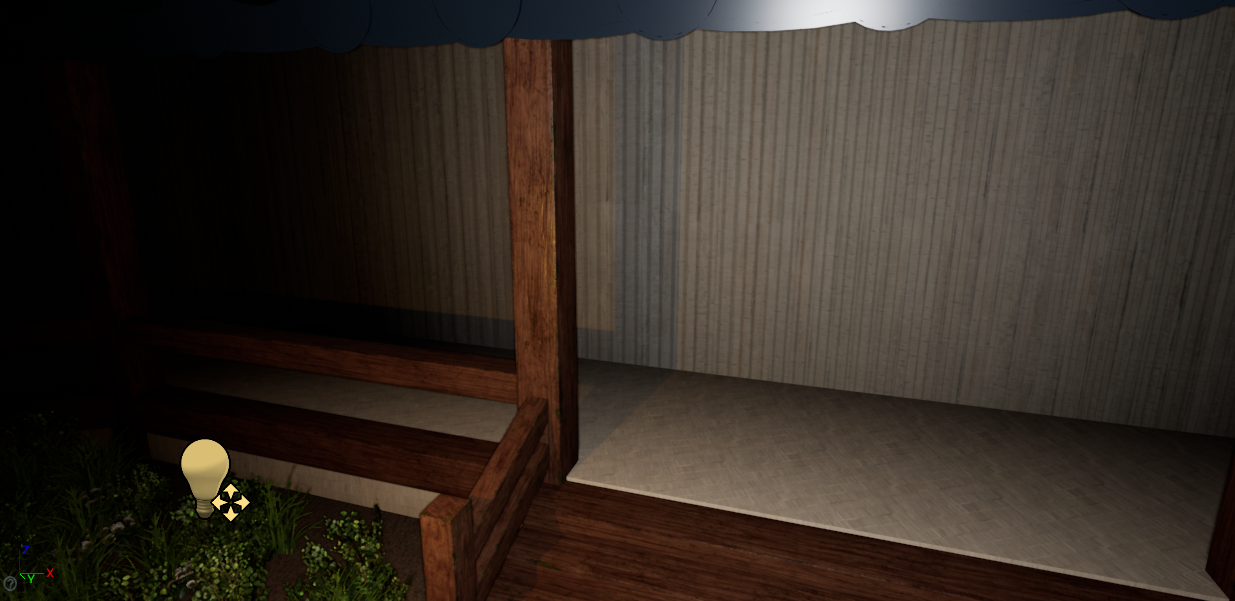
It should be noted that screenshots where sent to all team members, as we made these together at university on one pc. Oliver took the lead for physical design while the rest observed and suggested ideas. It came to our attention that the area was not big enough for what we considered a ”nobles garden” we felt we needed more space for a more complex design and our individual assets.
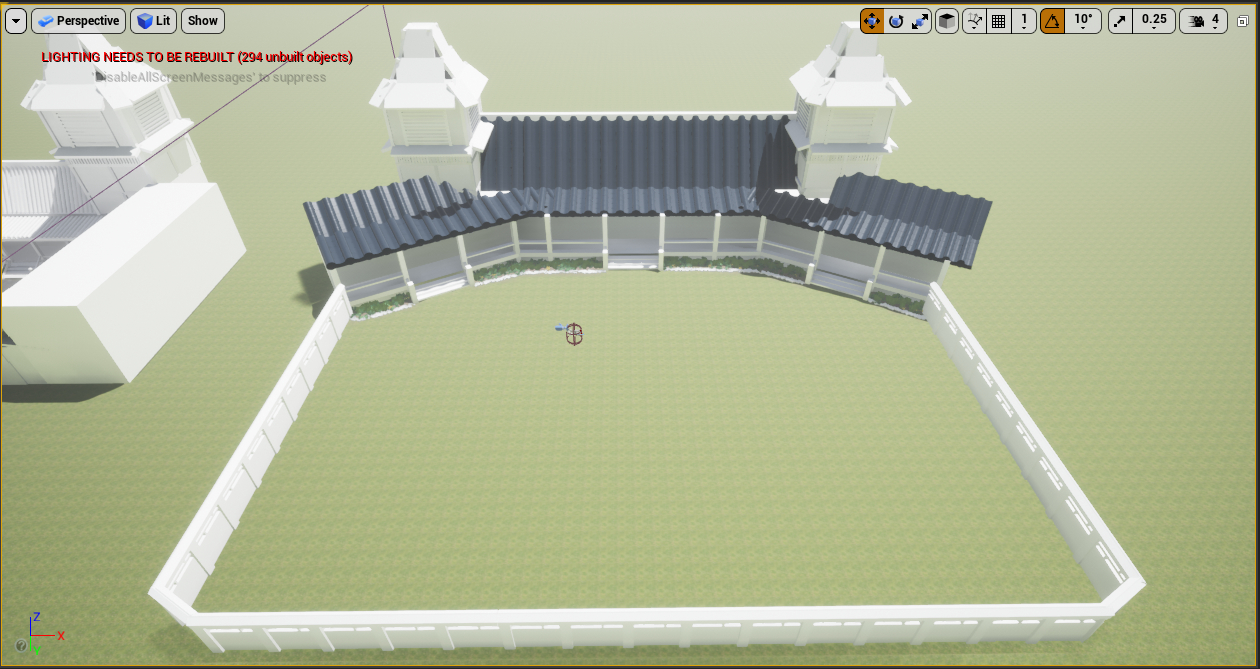
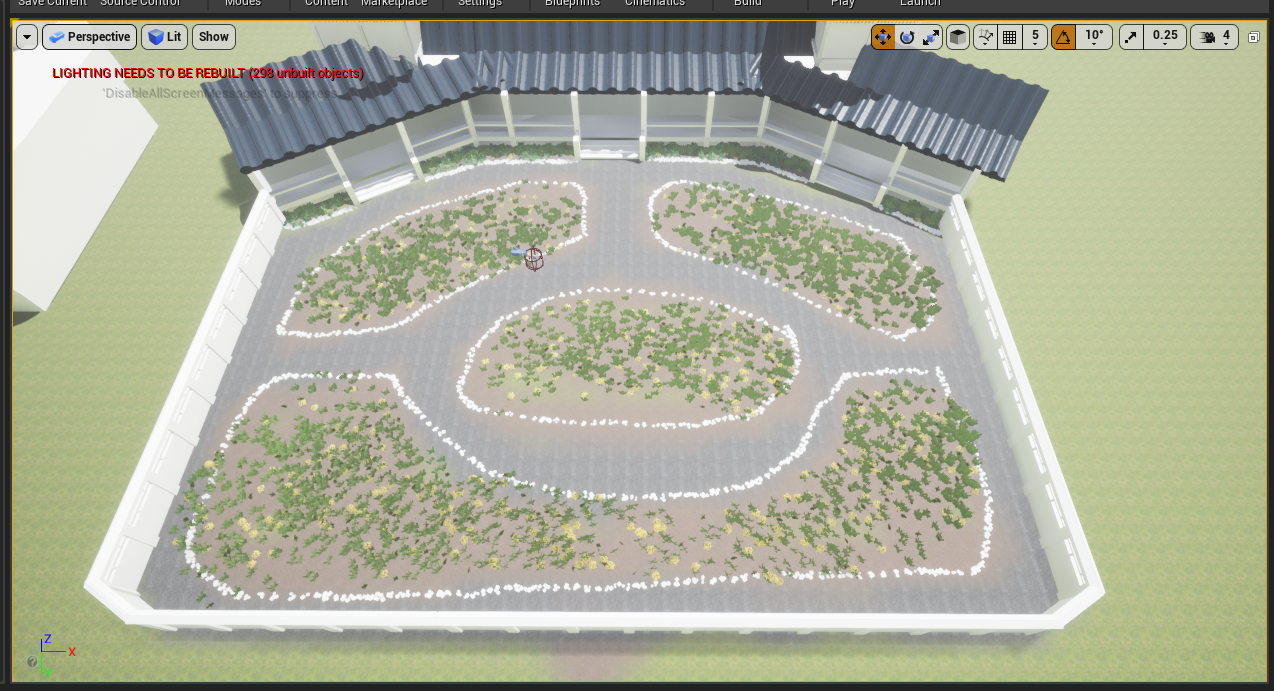
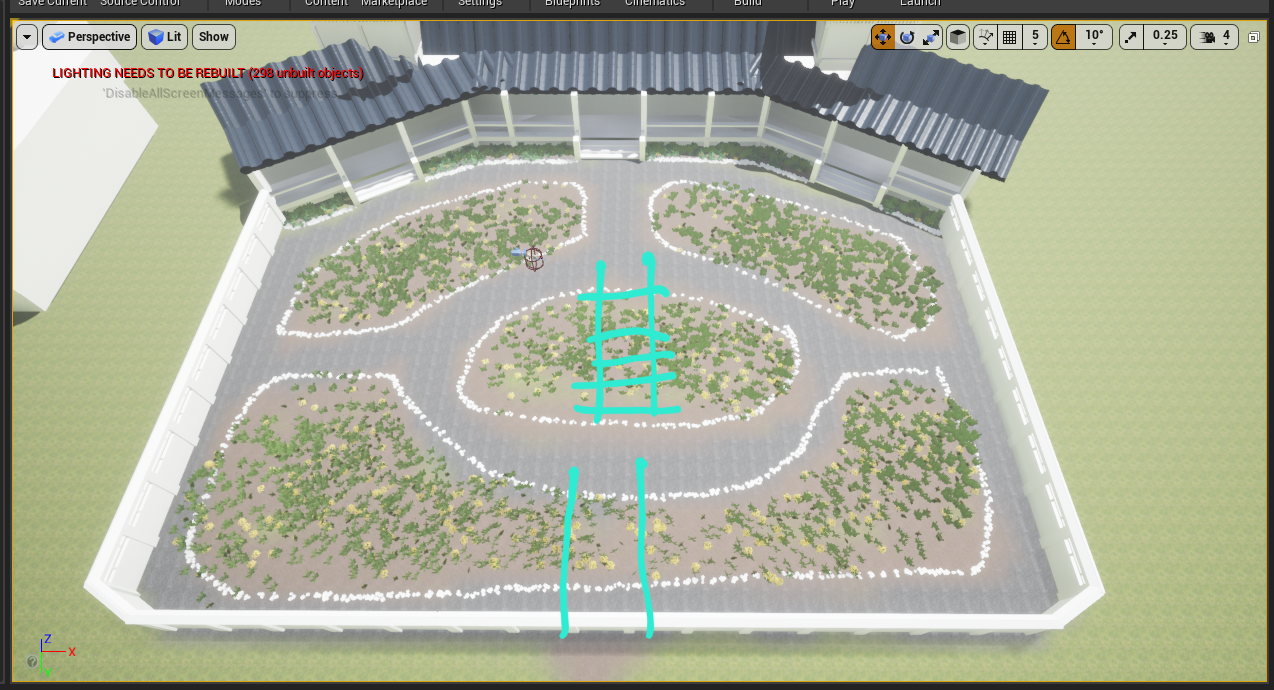
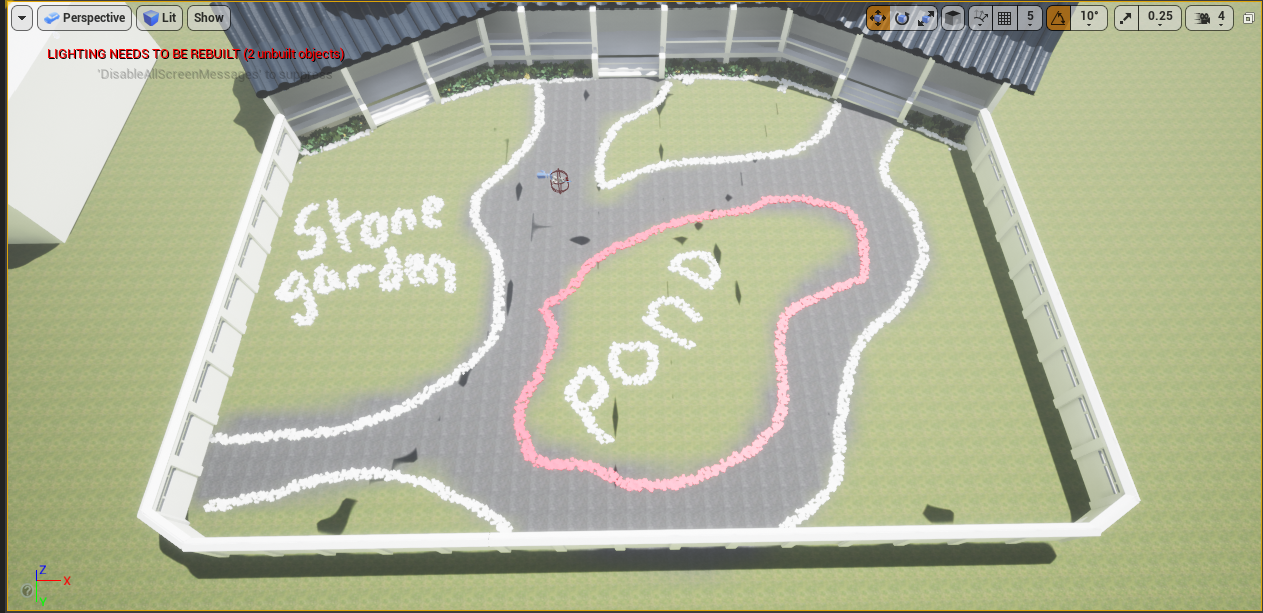
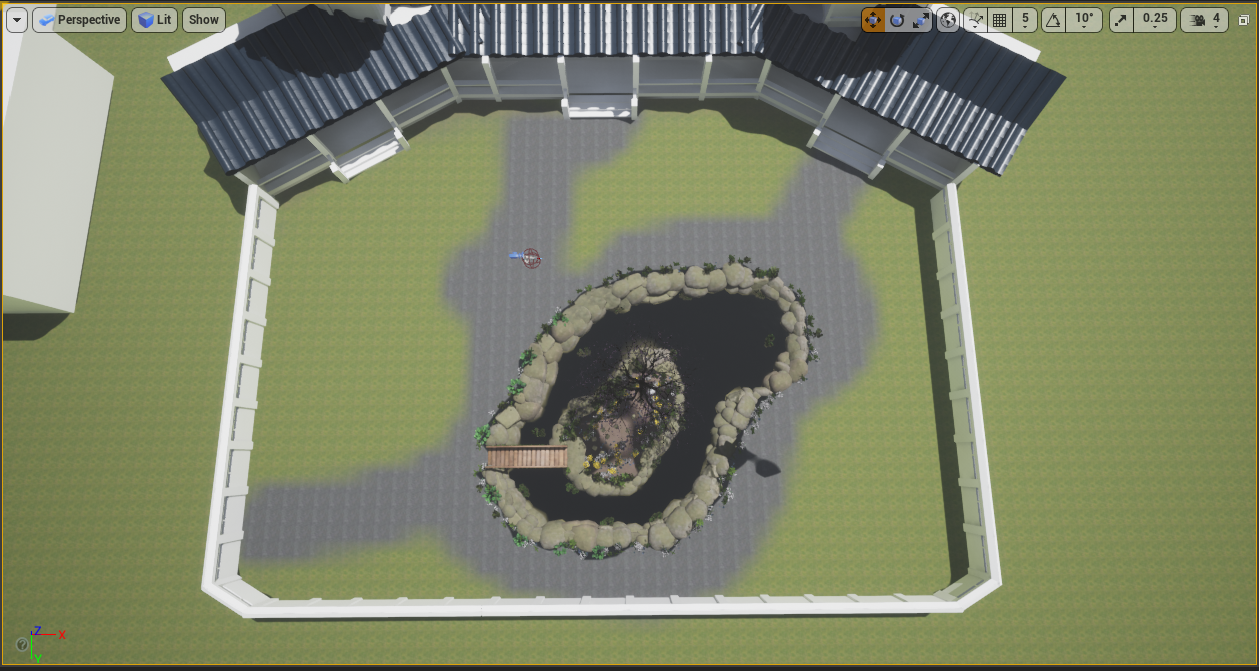
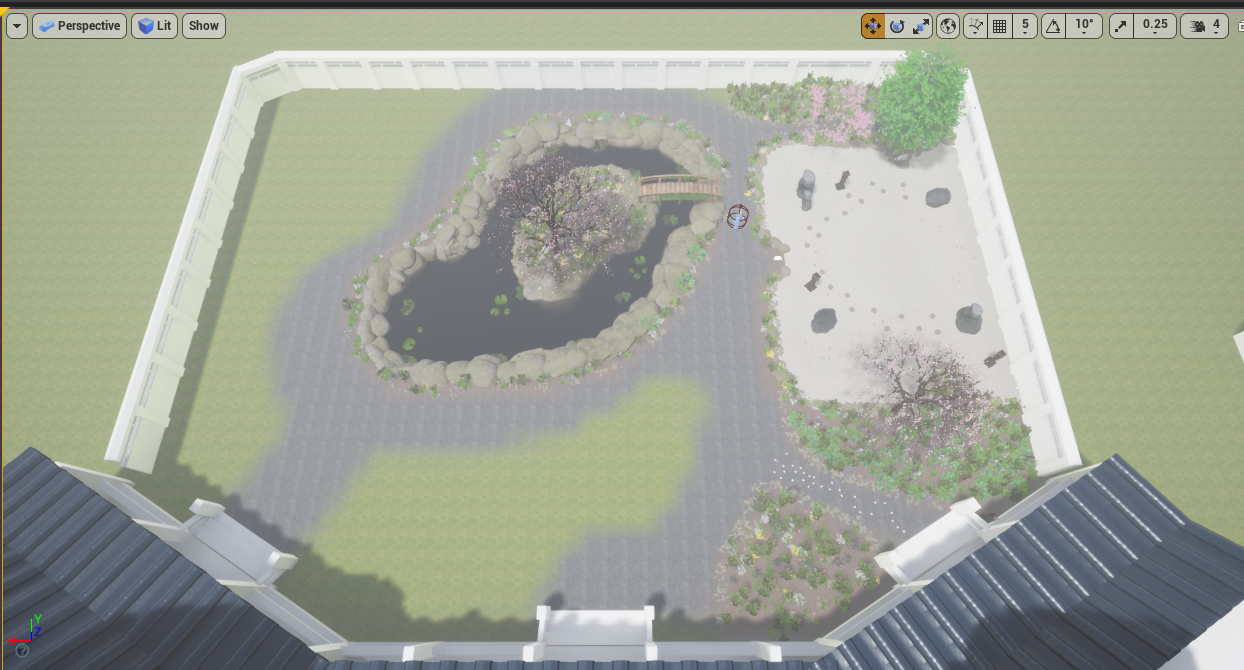
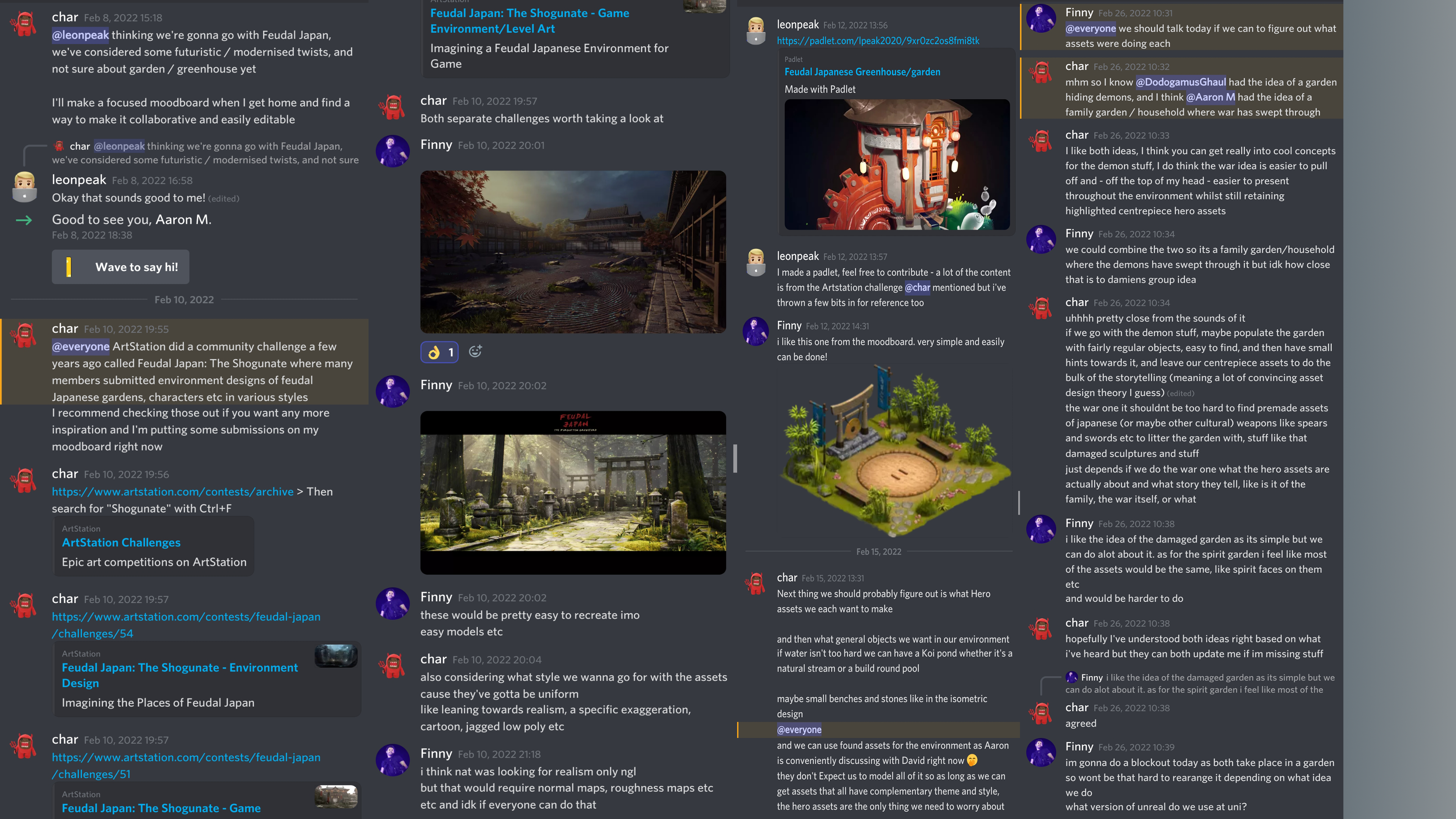
Collaboration, discussion, and feedback
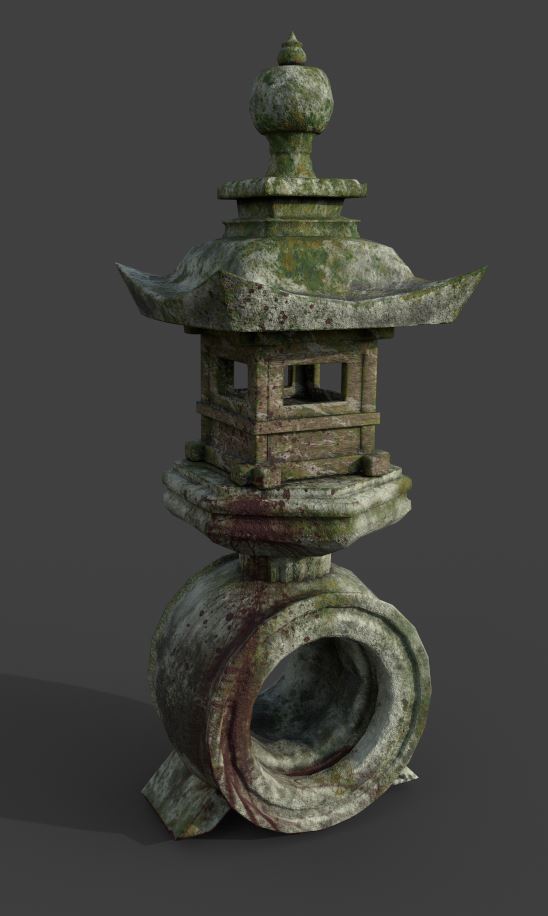
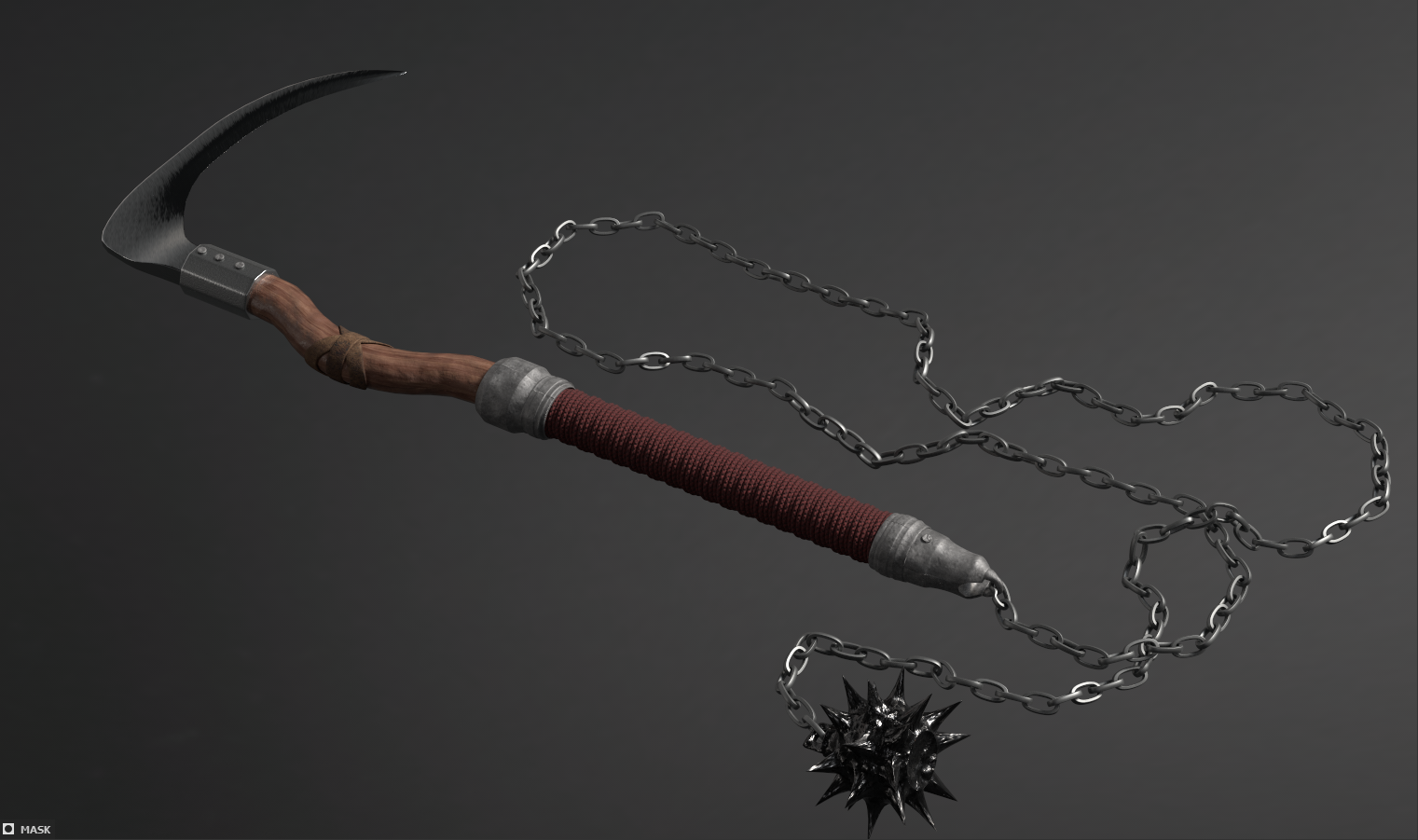
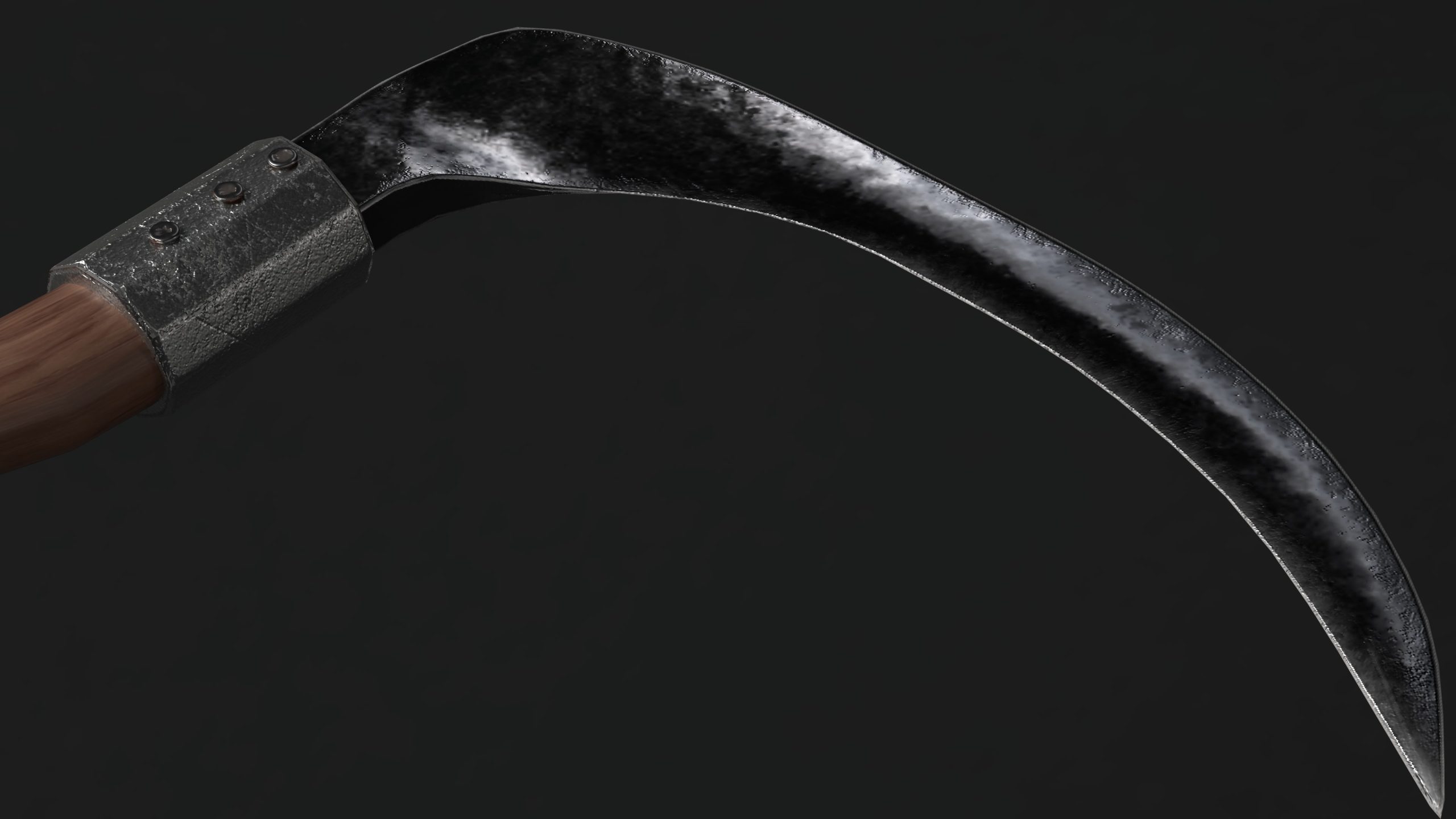
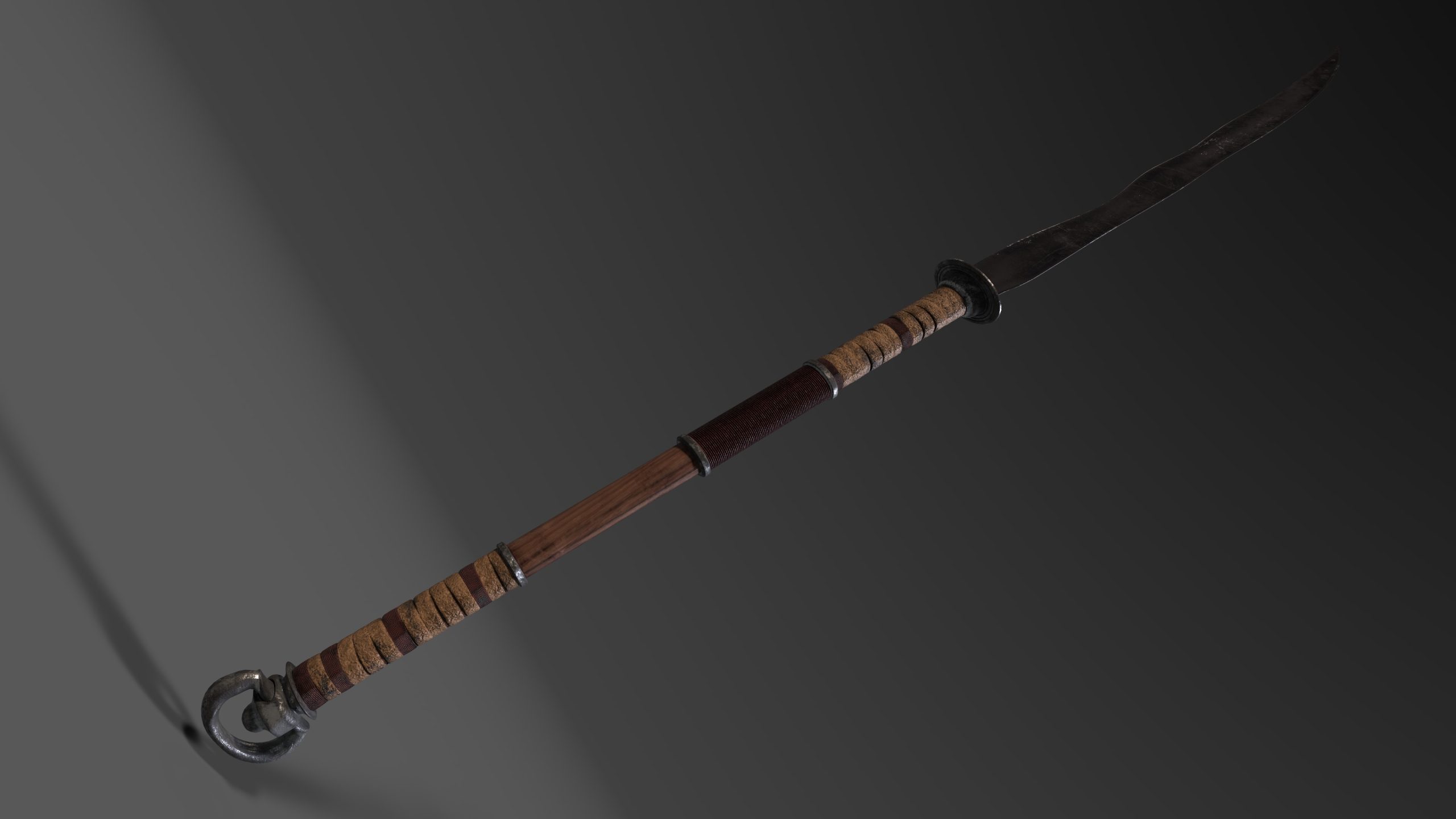
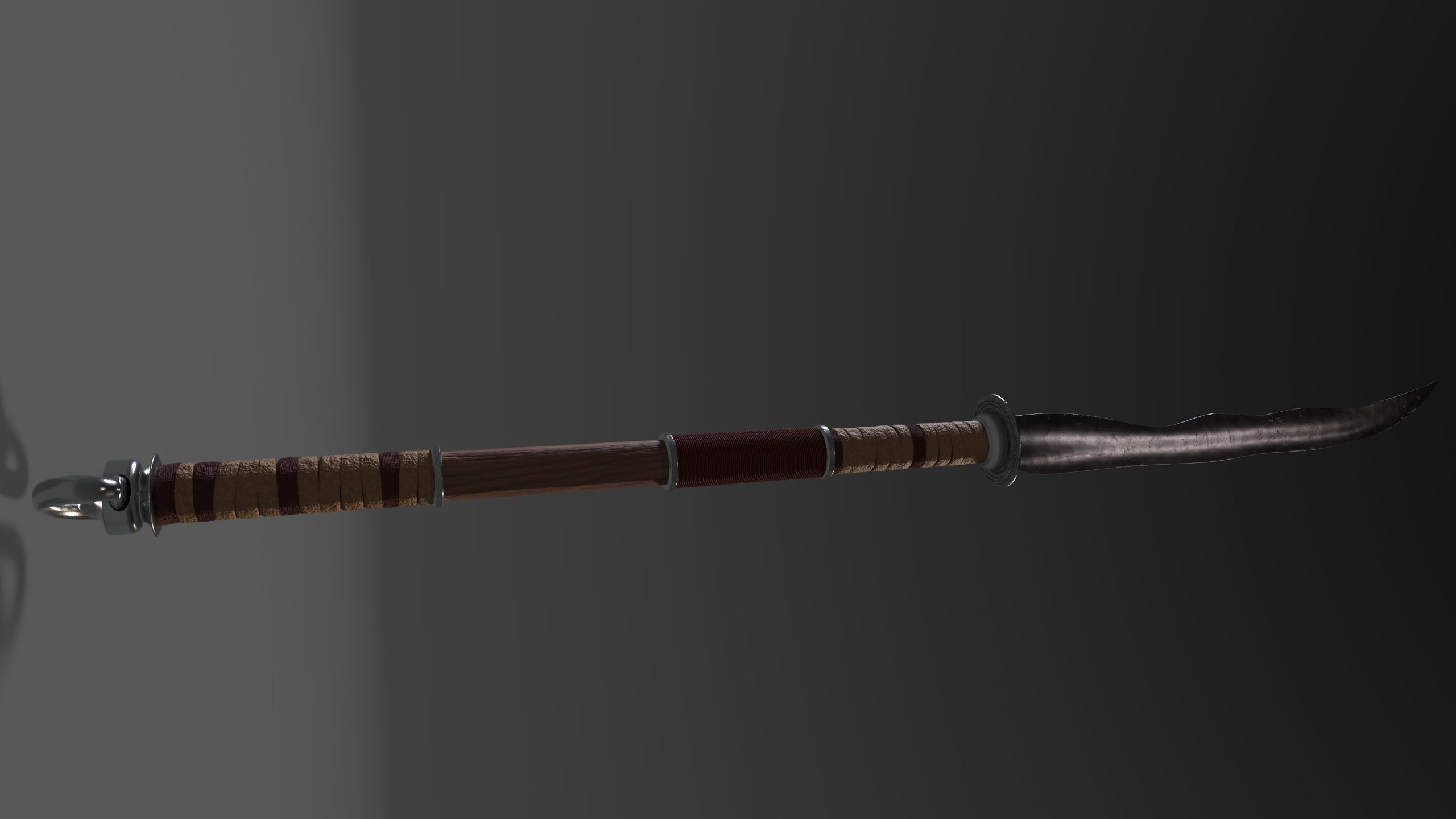
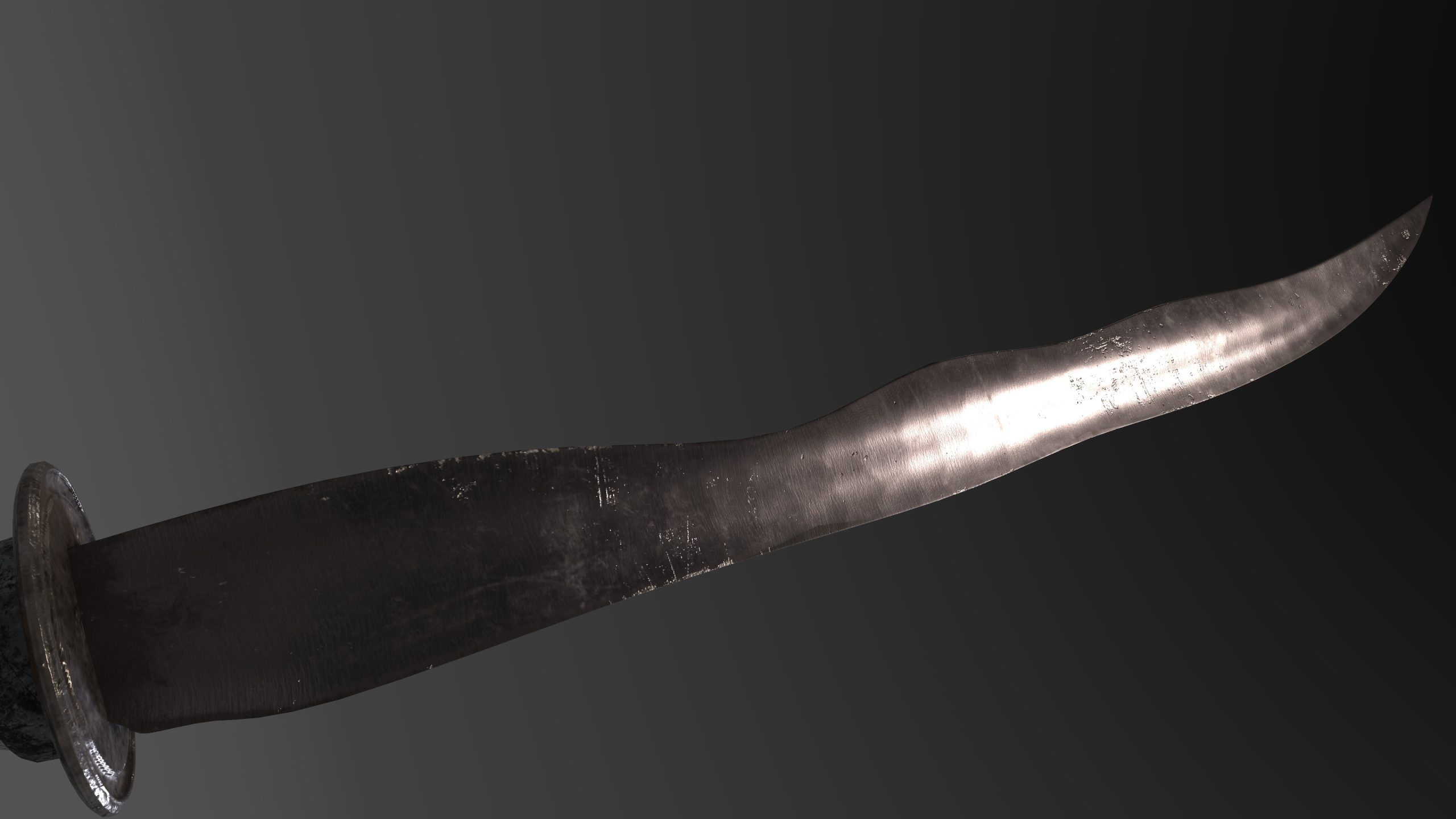
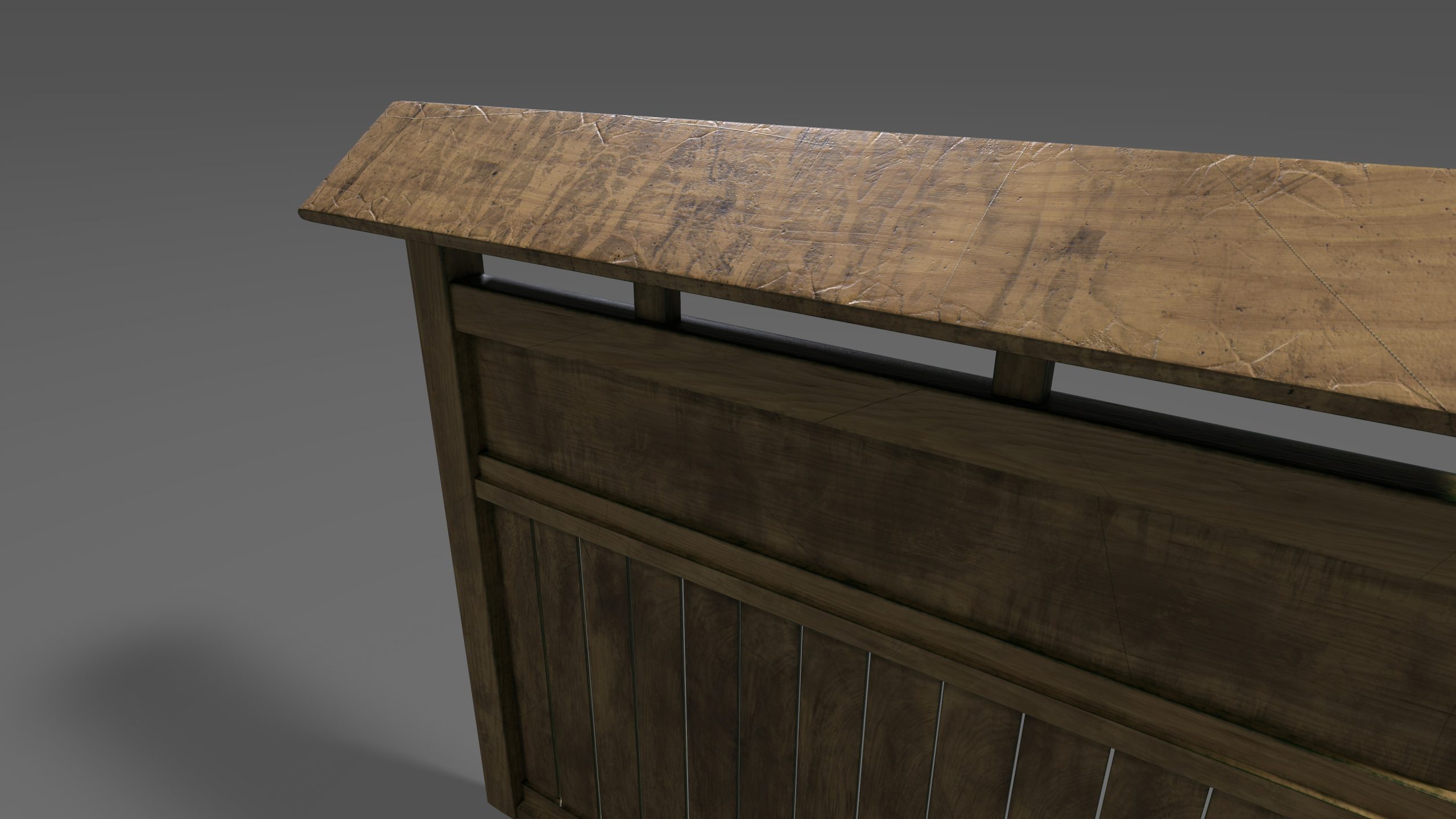
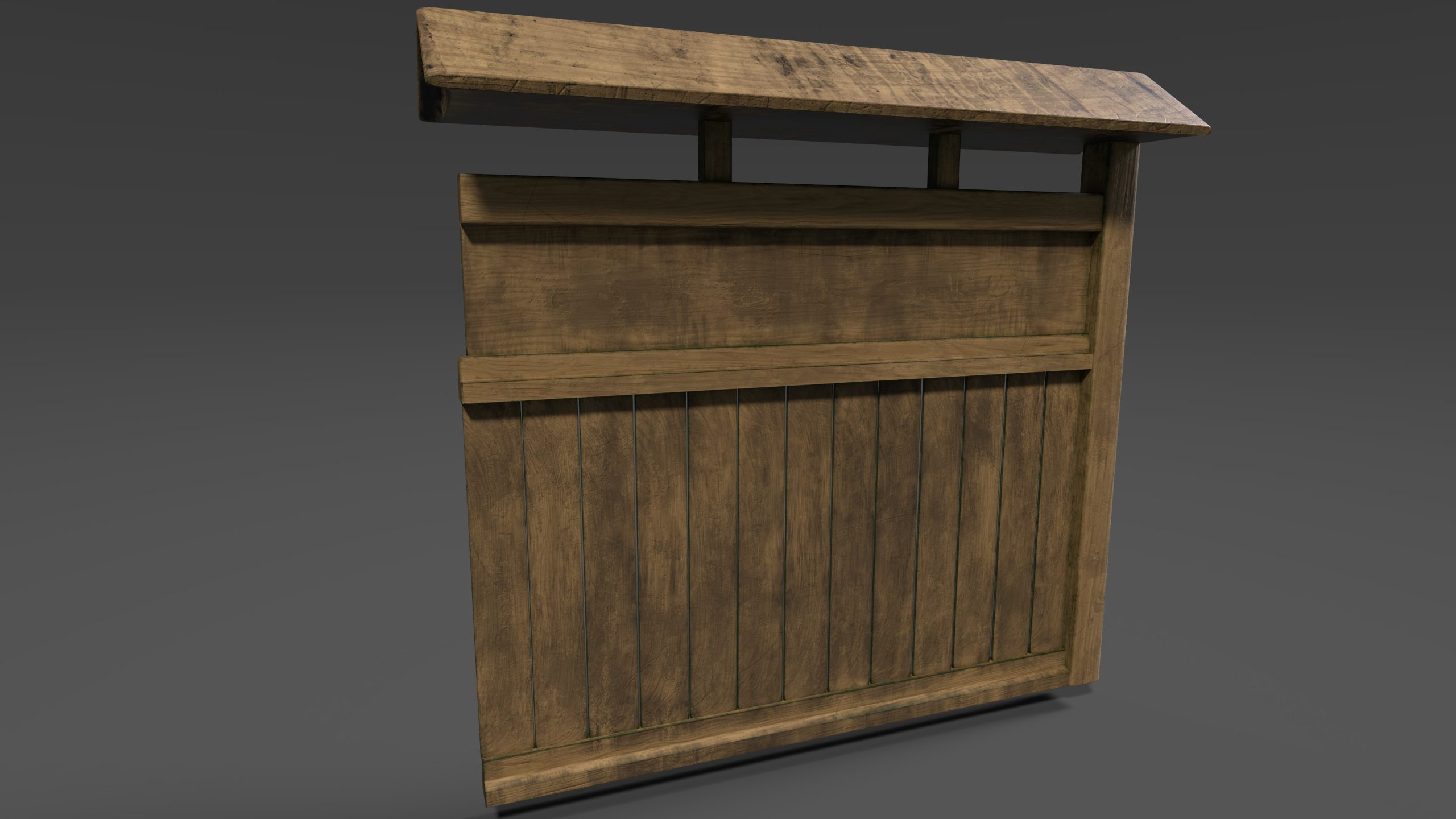
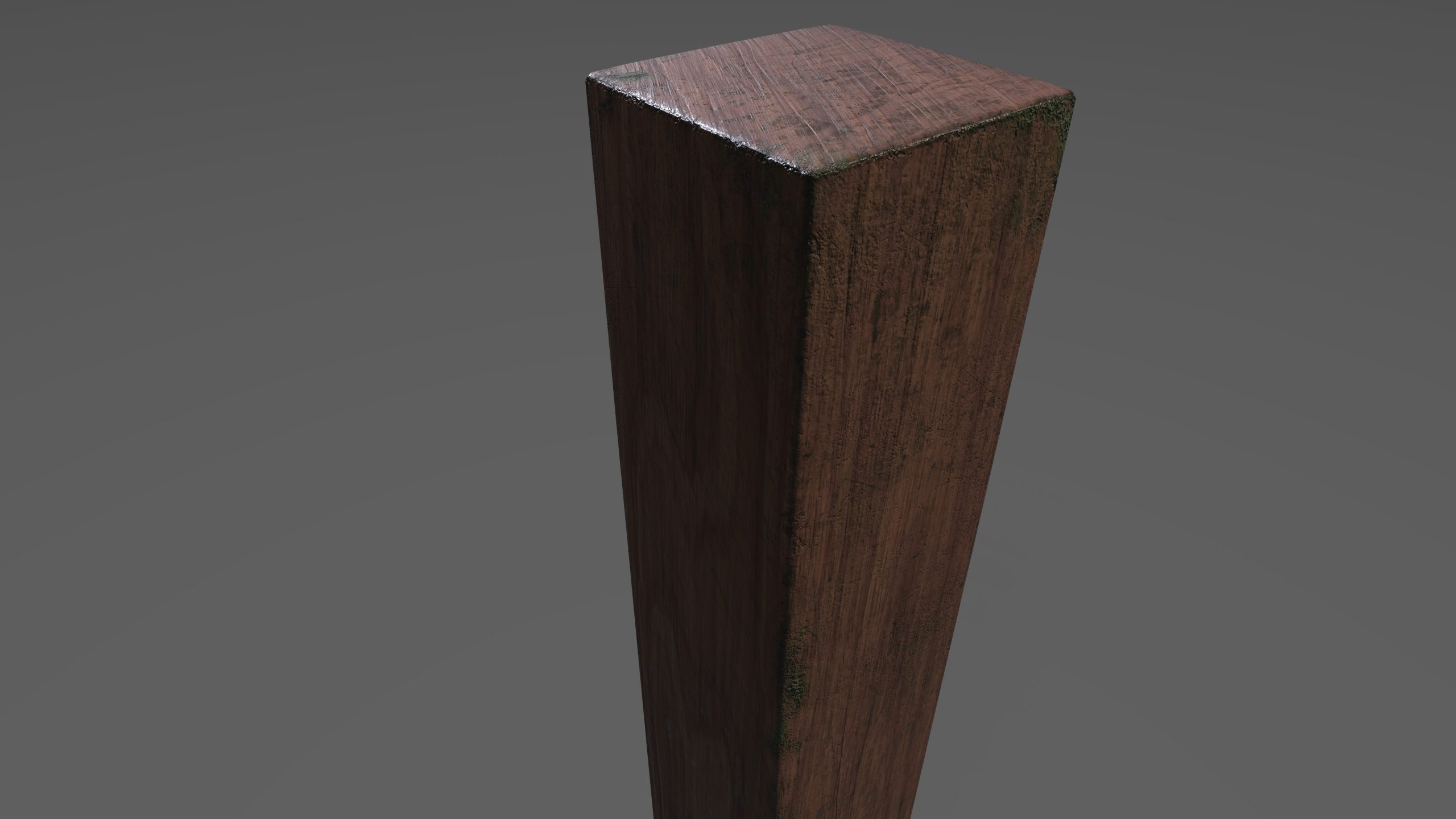
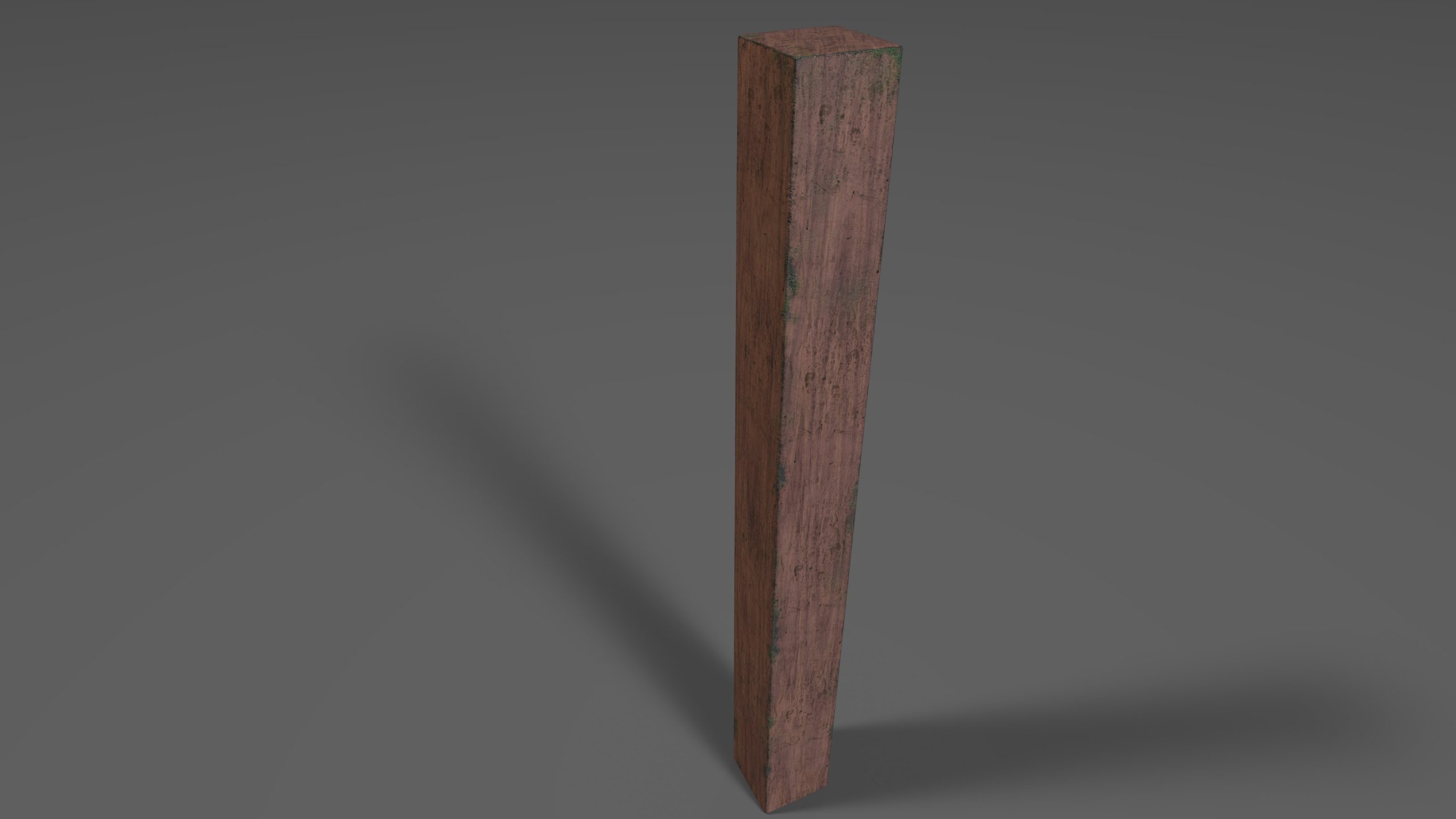
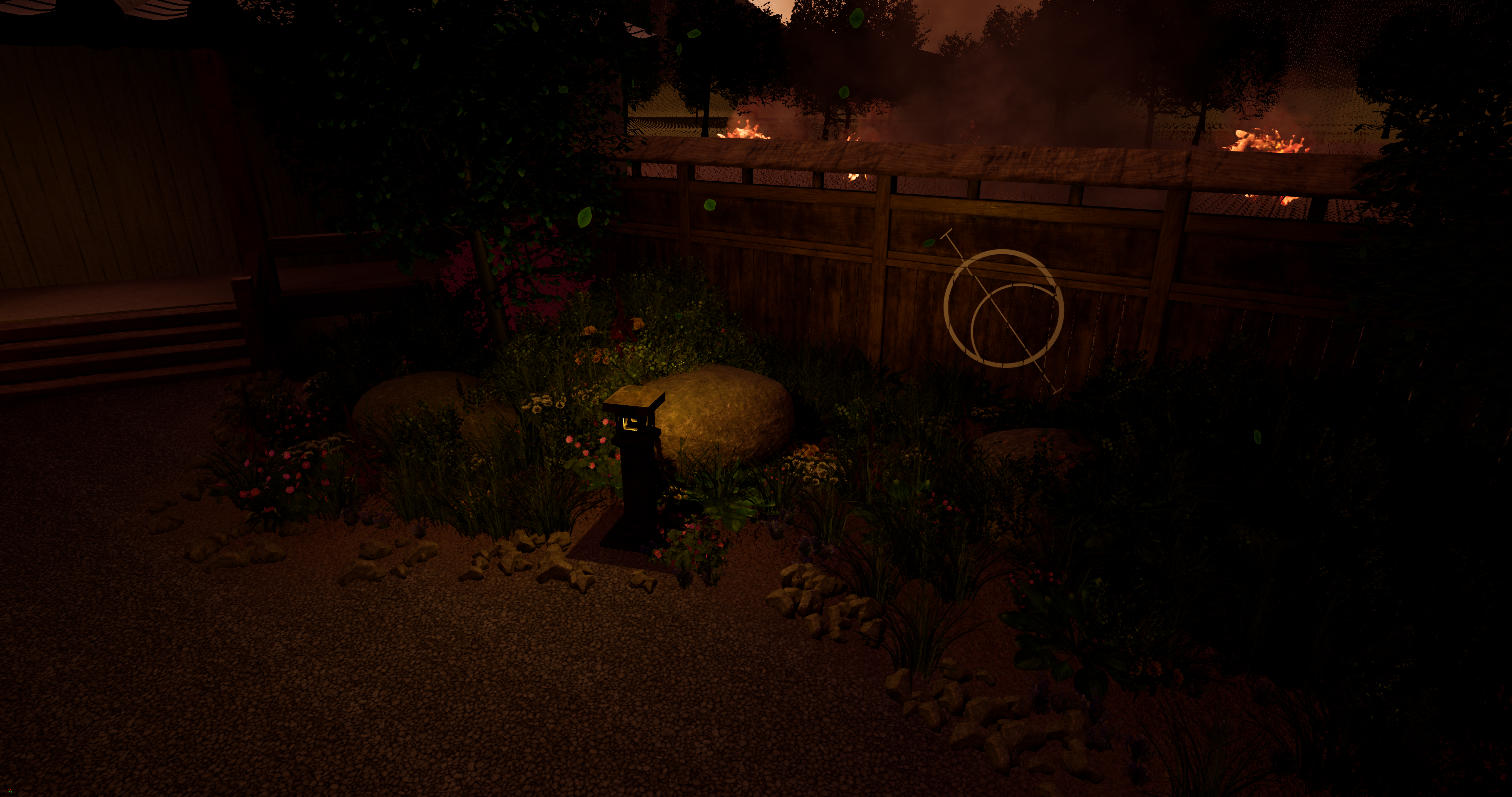
Within this project I was responsible for creating a variety of different assets. I created the Toro lantern which was my main asset – it has various textures and shapes to be an eye-catching aspect of the garden. Within the environment I also created the fence, both posts and beams, as well as the fence itself which was inspired by Edo-period Japanese architecture. I then turned my attention to object assets within the environment. I created the kusarigama (a Japanese sickle) and a naginata (a Japanese style pole arm weapon.) These were styled in accordance with the environment as they needed to look like they belonged there.
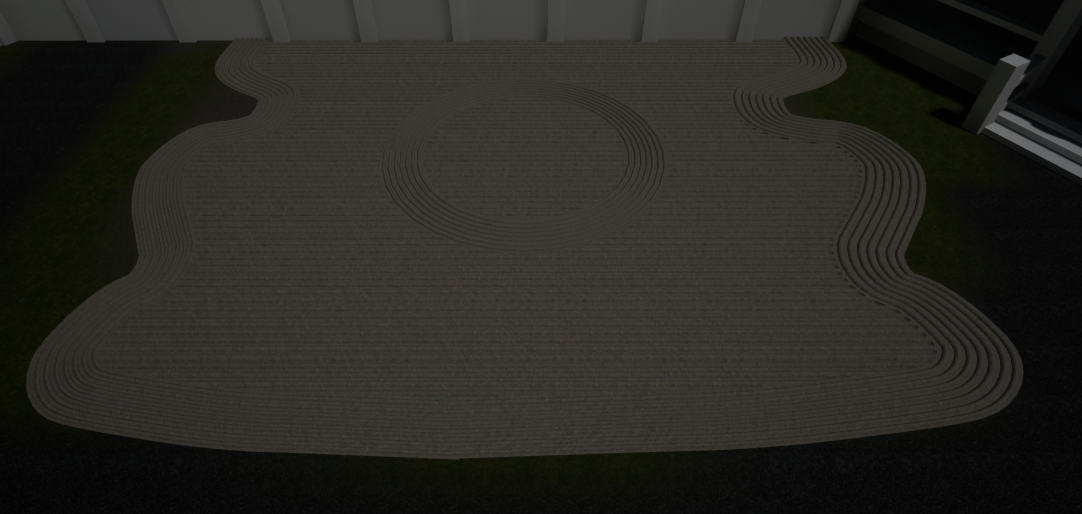
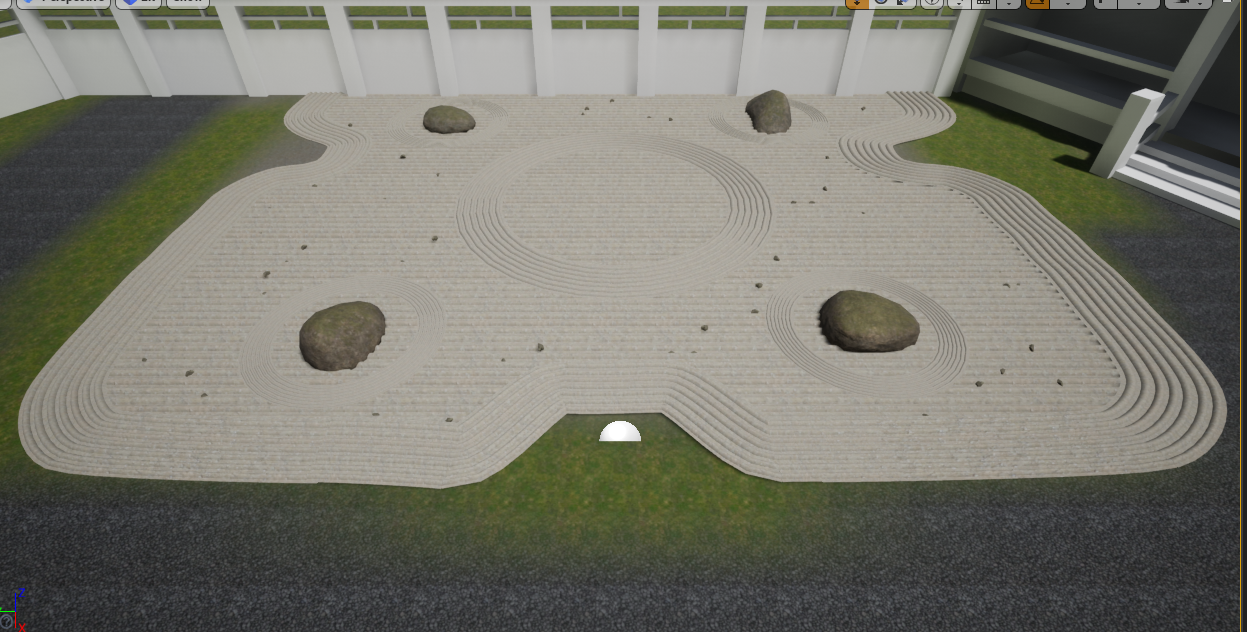
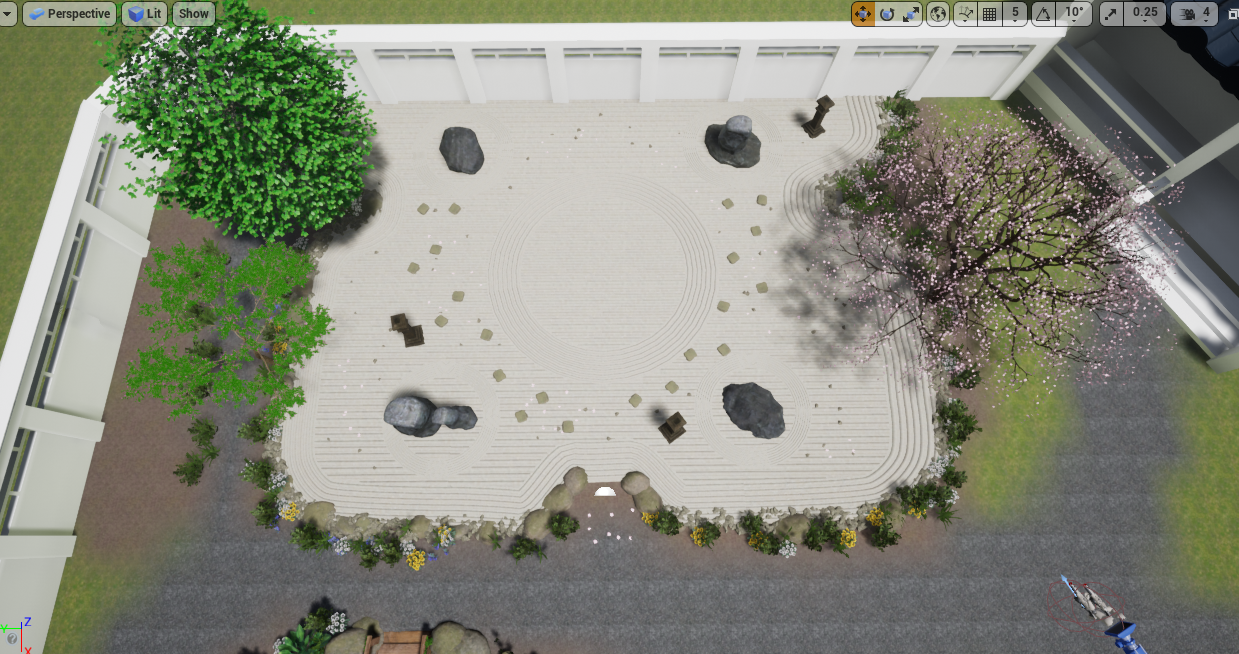
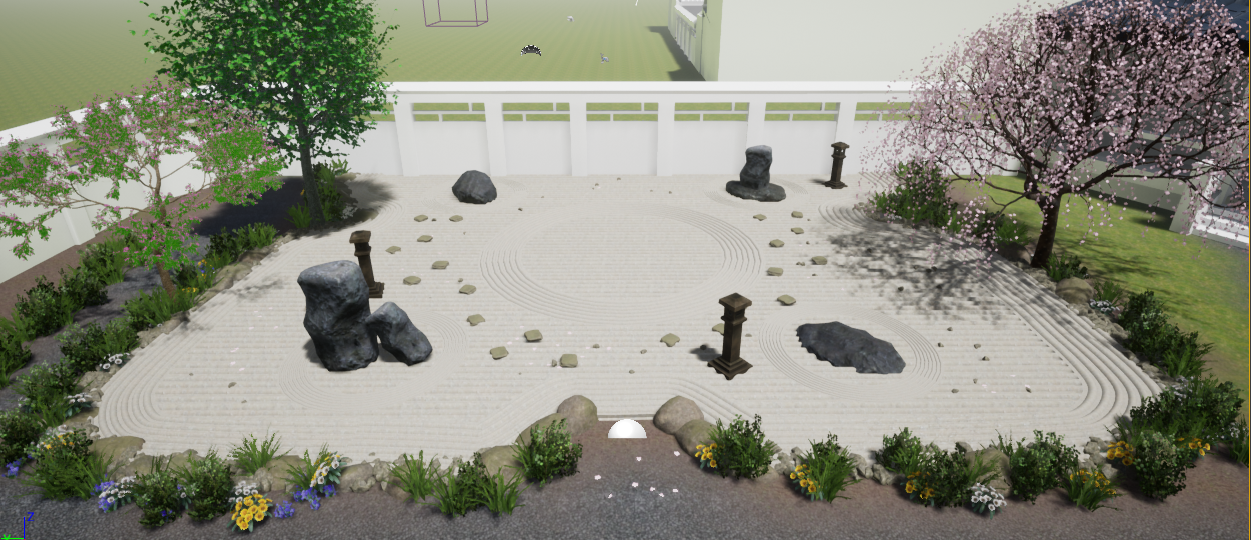
There were various additional environmental assets to add more detail to the environment and create a theme and distinctive style. I added foliage to make it more garden themed as well as to add age and dimension to the environment. This included foliage around the stone garden area. I created rocks which can be seen in multiple places across the garden, they have been added to fill space and to add realism to the environment. I used a gravel texture for the foundation of various parts of the garden as this is common in Japanese themed gardens, this was evident though research. An integral facet to the story line within the group was the conflict and evidence of this conflict being evident within the environment. I created splatters of blood across the environment making it themed to the story.
Many of the ideas for our group were discussed and developed in face-to-face meetings on campus. As a team we felt it was important to be open and present throughout the creative process and to do that, I organised team meetings during the breaks at university. We decided to narrow the process down to sci-fi and feudal Japan. We voted amongst us and decided that feudal Japan would be more distinguishable and memorable as well as inspiring many creative directions for asset development. We then discussed our current interests and skillset within the team. This displayed clear directions for different members of the group. These included a gong, a water fountain and a vase. Based on the research and mood boards we formulated, people picked with their own interests. We found during our research, it would be beneficial to divide tasks up and then through theming and continuous communication, keep the environment consistent with strong links between assets. During this stage of development, we found that Oliver had more skills and experience in Unreal. We used this to the group’s advantage by giving more of the set dressing to Oliver when dividing up the tasks.
Throughout our work as a team, we regularly assessed each other’s accomplishments and used feedback to help reconstruct and further improve our designs. We verbally addressed areas which we thought could be improved through constructive criticism. With the weapons, it was suggested that beauty could be found with the simplicity of some shapes as this would allow them to feel more natural and thereby the assets would fit more cohesively with the environment. We discussed the light source and what colour would be most effective, we disagreed and tried assorted colours out until we found a choice the group could agree on. Overall, as a team, we work closely to portray a specific vision.
Environmental Storytelling
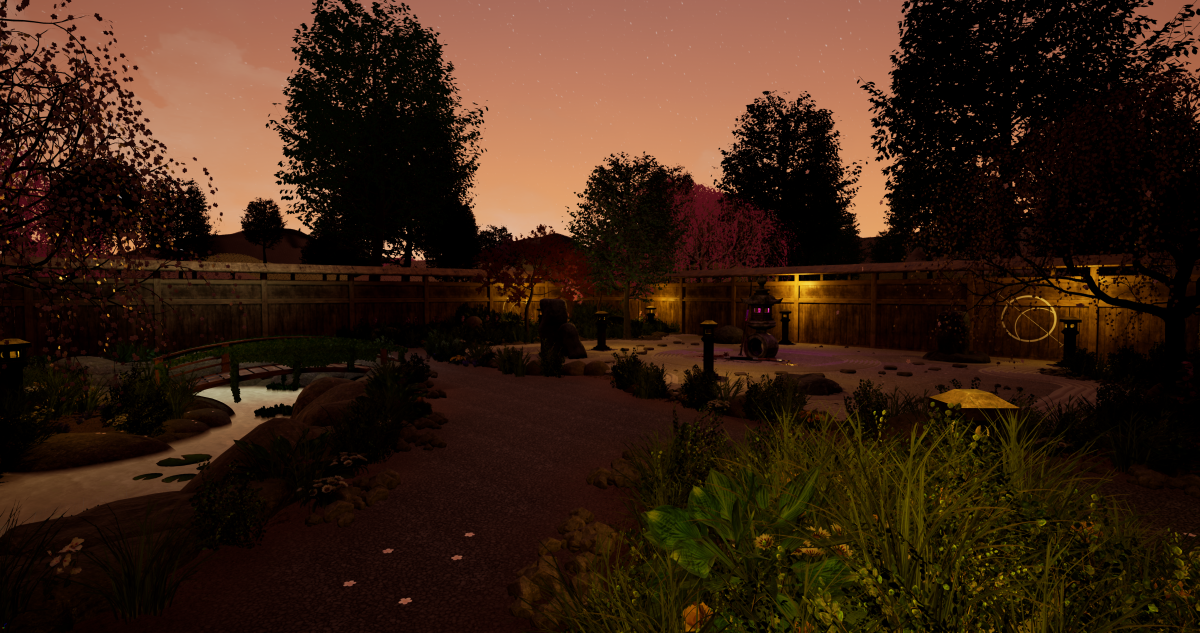
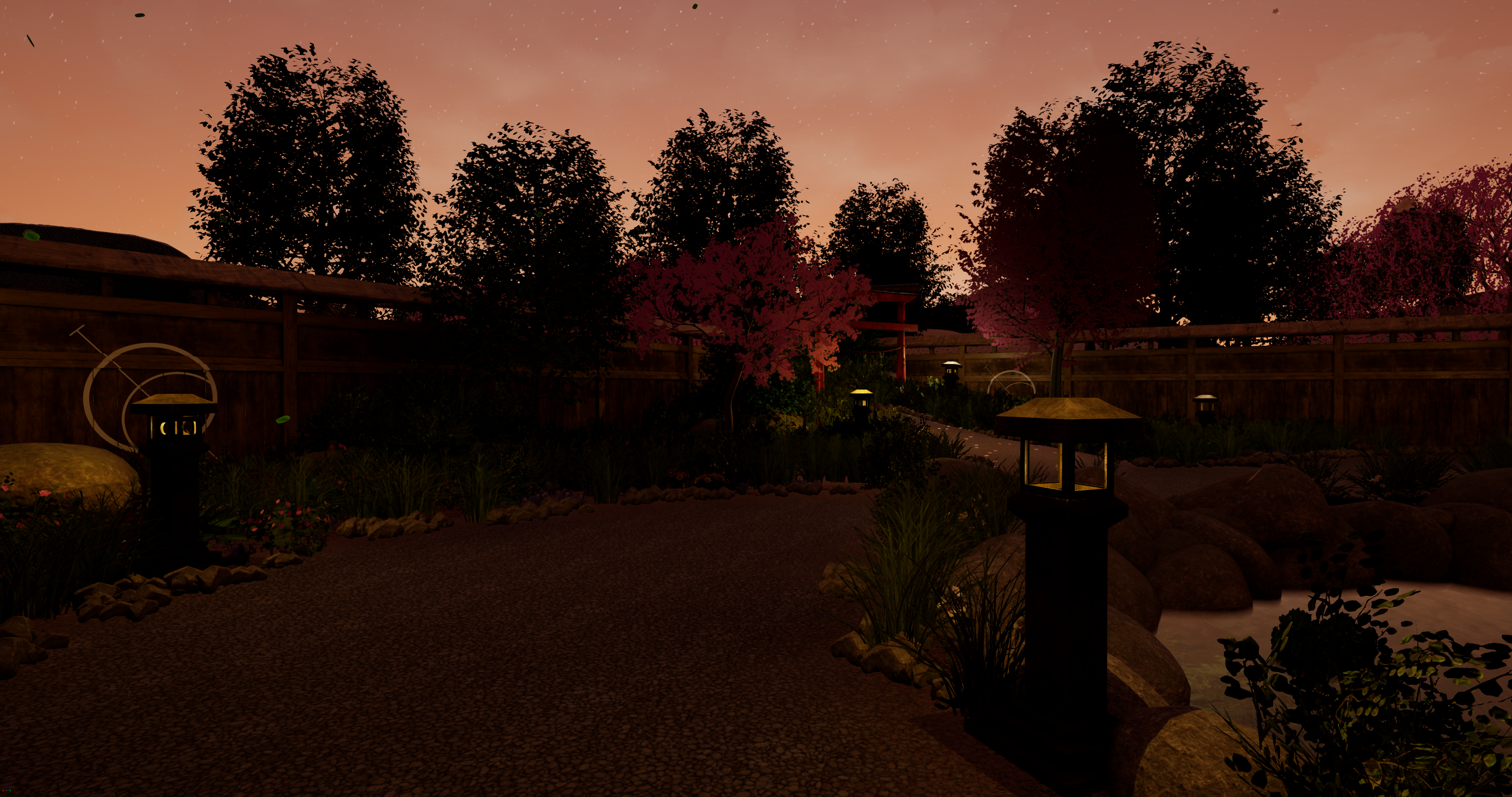
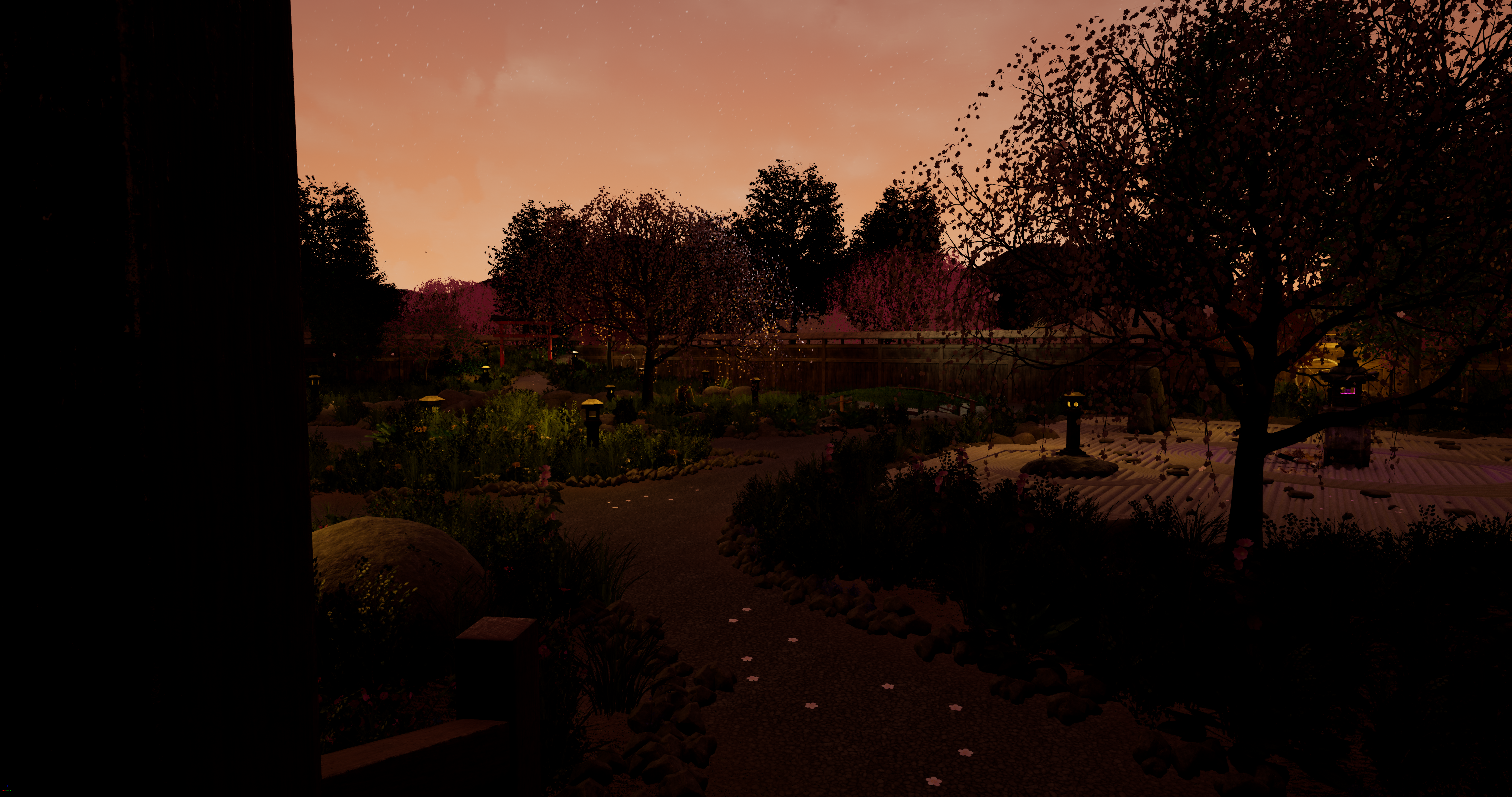
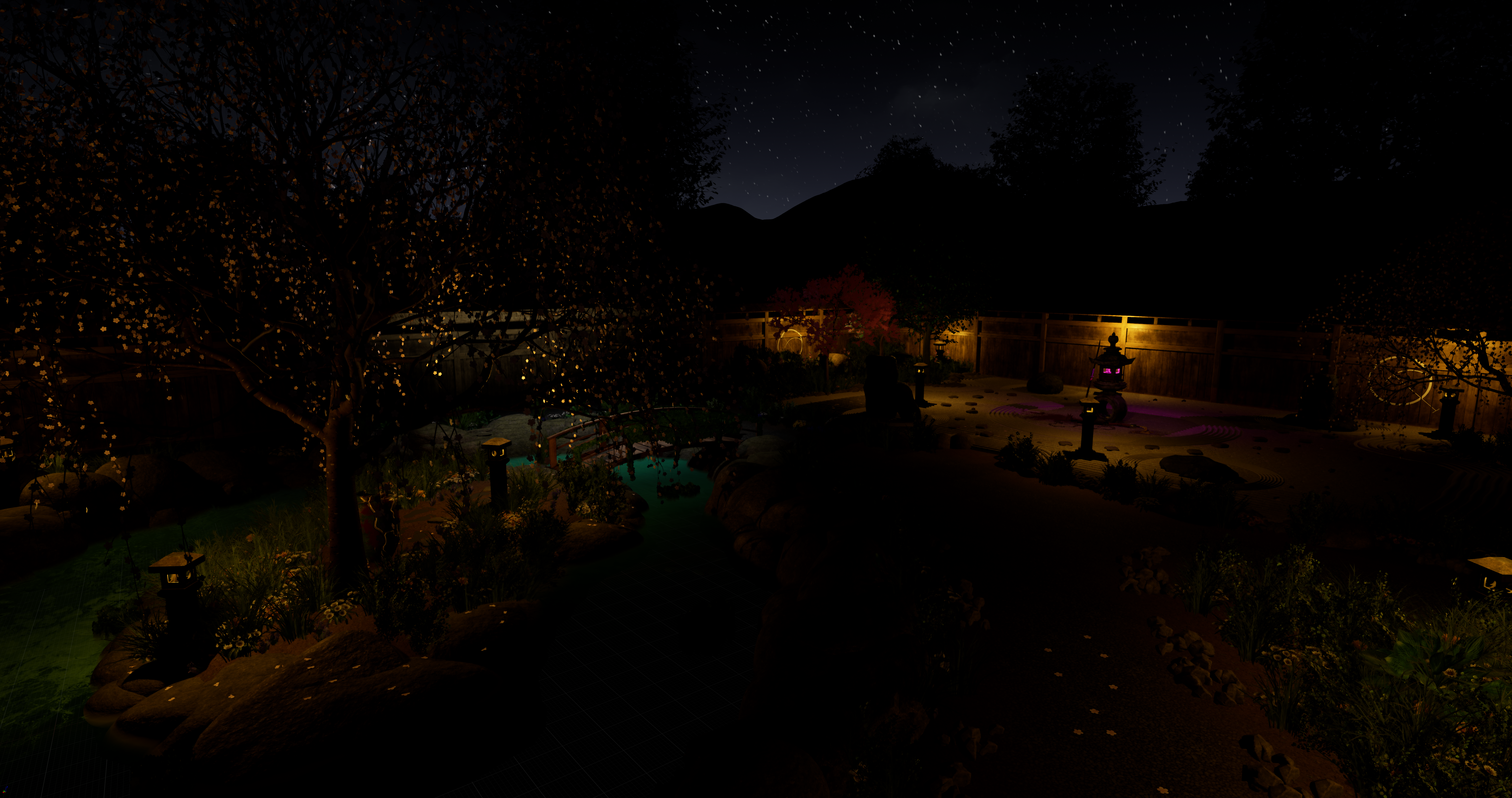
There are numerous examples of red and white being used across the garden environment. This is due to thematically, Japan having distinctive colours to associate with its culture. These can be seen through blood as well as within the weapon assets. The shade of red used came from the clothing that Nobunaga wore during Edo-period Japan. For many of the assets, inspiration was taken from Edo-period weaponry. These forms of weapons can be seen to have smooth wooden shafts and are made of natural materials such as wood – typically red or white oak. Both weapon assets which I have created boast wood from their natural environment and in doing so, they link thematically with the environment. The serenity of the environment needed clear marks of disturbance linking with the story line. To do this, both of my weapon assets show damage and wear easily (as does the surroundings.) Japanese weaponry along with its architecture tend to use ornate and distinguishable designs. All the assets show ornate aspects, within the weapon asset, the blade guards are ornate – as are the collars and wraps. These run parallel with the ‘heirloom’ feel to all the assets within the environment. Realism is used to heavily link the narrative to the environment. The surroundings are hyper-realistic, rendered repeatedly. The assets I have created followed this same design technique. I researched the steps to building a realistic weapon, thereby ensuring that if these steps were followed when creating the asset, the overall assets would both individually and collaboratively seem realistic. The environment is a natural and tranquil place, the lantern asset was designed with this in mind to follow the ‘cyclical form of nature.’ The Toro lantern is thematically traditional, meaning any player in the game would be immersed fully into the intricacies of Japanese culture. The lantern was chosen as it can be seen as a metaphor. Mikatagahara set fire to the city environs, the flame within the lantern is a small homage to the culture’s background, a reminder of the carnage behind the tranquility.
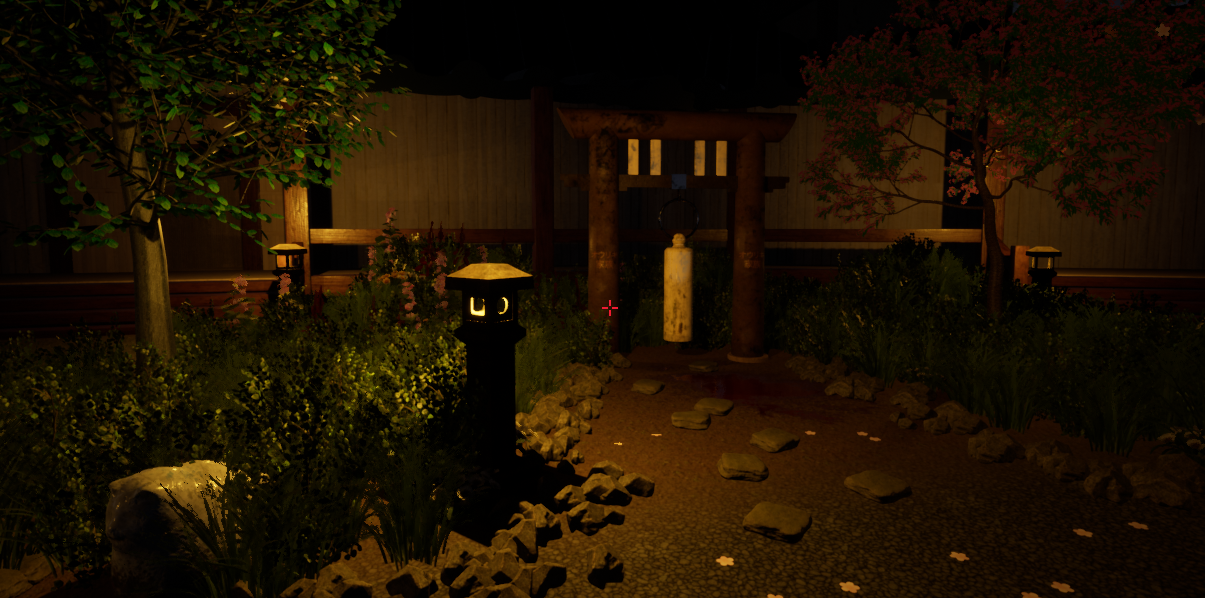
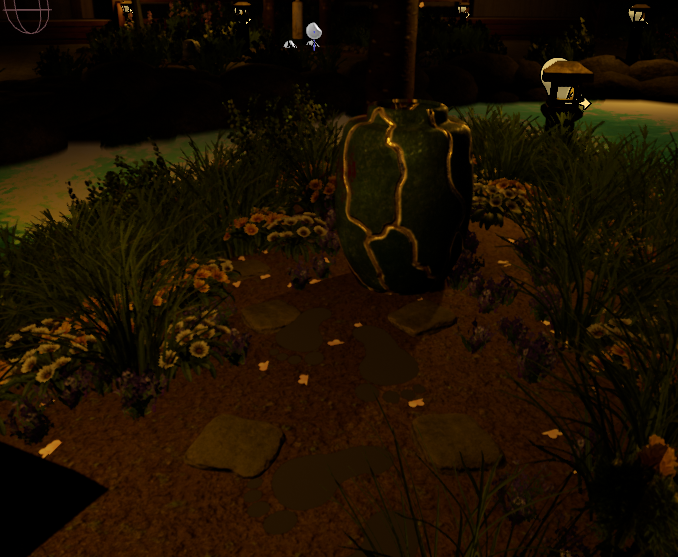
The environment was designed to be the scene for a war time scene in Edo-period feudal Japan. It is that safety space that has been invaded, the fight between war and tranquility. The environment is created to display the disturbance of those quiet domains in Japan, a conquered area. Within the story, Nobunaga is searching for artefacts, the multiple assets which are traditional and valuable in nature set up the purpose for the story. Without the displayed assets within the game environment, the war lord would have no purpose to be in such a garden. The use of light in the garden allows the inference of this garden belonging to ‘a good guy.’ In the story, the house and garden belong to a Noble. The gong asset is used as a form of alert to others, within the story this would indicate a high threat or conflict. The walls have been breached and burnt, which is indicative of pain, loss and emotion. This was something the group wanted to subtly convey. The vase asset within the garden symbolises the yearning for triumph and power, the garden is subsequently destroyed to possess it. Nobunaga was known for being anti-Buddhist. To our group, it became clear that to create a contrast to indicate a story, the garden should be realistically Buddhist, including artefacts, treasures and natural displays. In the story there is a demon exuded from the vase when it is broken, killing everyone in its vicinity. The Toro lantern in the gravel garden spreads an ominous light throughout the environment to create tension and suspense. The two great warriors lost forever into the lantern leave blood trails indicating an altercation and danger. The vase asset within is the power and focal point for the environment, the placement of weapon assets nearby, symbolise that yearning and fight for power. The placement also forms questions for the player about where the previous warriors may have gone, this spiritually links back to the theme and back to the garden’s key concept. The garden concept represents the links between life, death and spirituality, assets within the environment were designed to accentuate this theme and create a symbiotic theme of story and environment.
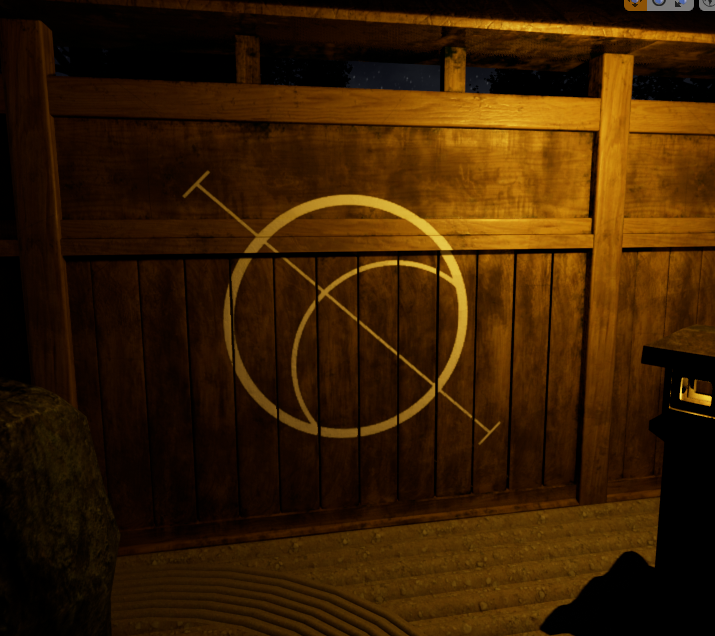
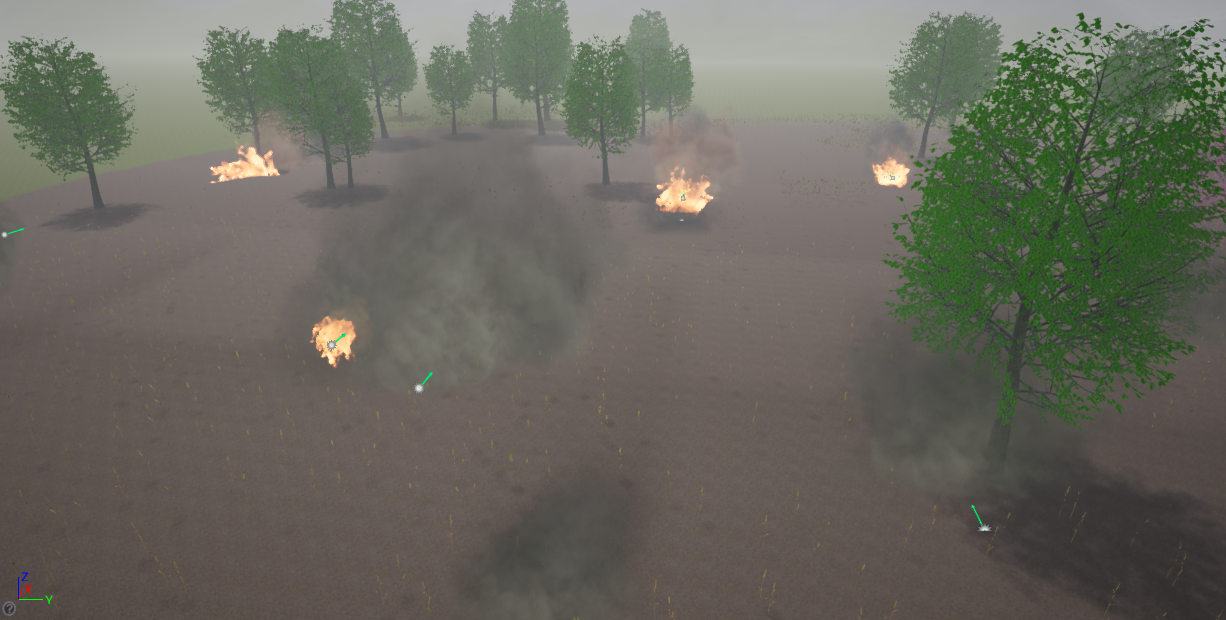
There have been various design aspects which have contributed to the overall finishing product of the garden project. With so much detail required to make the scene obviously Edo-Japanese, decals, particle effects and set dressing through prop placement have all been used. Within the garden scene it was integral to portray detail and story. This has been done using decals. The main feature in which decals were used was the blood stain effects. To create believable art and a realistic scene, as the designers, the team needed to pay attention to detail. You create decals by dragging png into the textures folder in Unreal. You then create a new material, rename it and change the surface to the preferred decal. You then use blend mode to translucent and shade the model to unlit. Switch to decal blend mode to dbuffer the translucent colour with normal roughness and if Ao in name, correlated to red. As the theme of the garden is old, worn and mysterious, I needed to focus on how objects are affected by wear and tear. I then needed to translate this into something that is aesthetically pleasing. It is time consuming to generate each object through sculpting alone and when working on a group project such as this, decals ensure the assets had distinguishable wear and were developed and created as efficiently as possible.
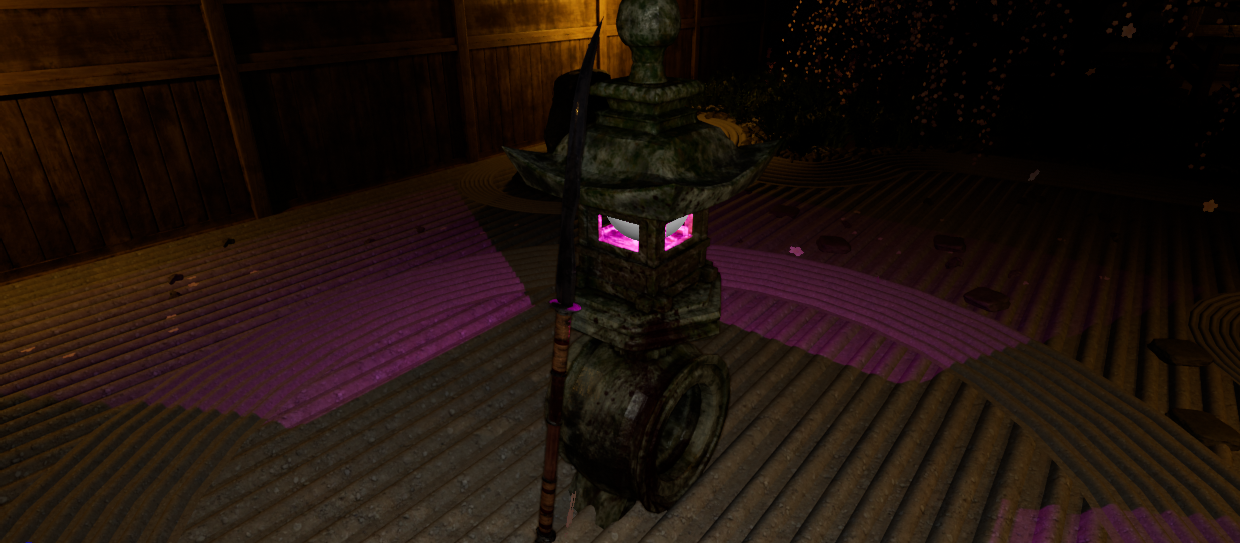
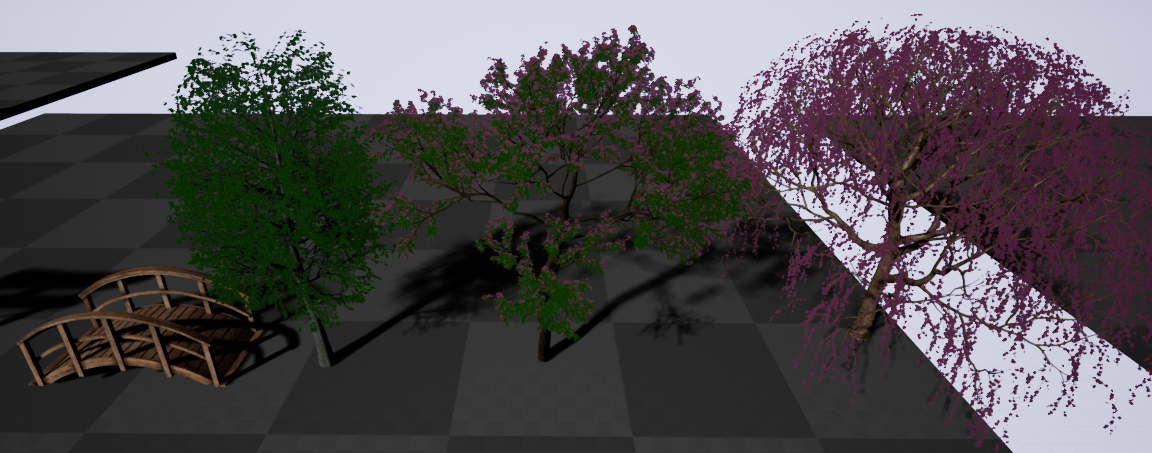
To create atmosphere within the environment, effects featuring movement needed to be added. This would give the garden life and would help it embody the story, bringing the design to the forefront of the story. The best and most uncomplicated way to do this is using a particle system to generate moving parts to the assets, commonly smoke, fire and explosions. You do this by creating a particle emitter which then launches small ‘particles’ that can then be displayed as small bitmaps, boxes, or pixels. Within our group’s design, Oliver led this aspect of the design. He added the fire and coloured it accordingly. Oliver also added additional detail to the trees using particle effects. By doing this, the cherry blossoms can be seen to be blowing in the wind. Particle systems have proven to be a simple yet effective graphical effect. A way to improve this in the future would be to have the particles interact with the scene around them, allowing them to bounce off players and areas of the environment. The use of the particle systems to create flowers and blossoms allows a greater opportunity for a brilliant first impression – when selling a game, this is valuable. Along with this, the prop placement within the garden was important so that it worked both visually and fit closely with the narrative. Examples of specified prop placement include the gravel garden, the flower beds and the shrubs. They have been placed to ensure realism within the garden. The flower beds add culture and beauty to the environment, whereas the disturbed gravel garden indicates the back and forth between tranquility and conflict. Placing props such as these in the garden scene helped ground the idea to the theme explicitly – as well as supporting the assets to create an interactive and realistic environment.
Made/found assets
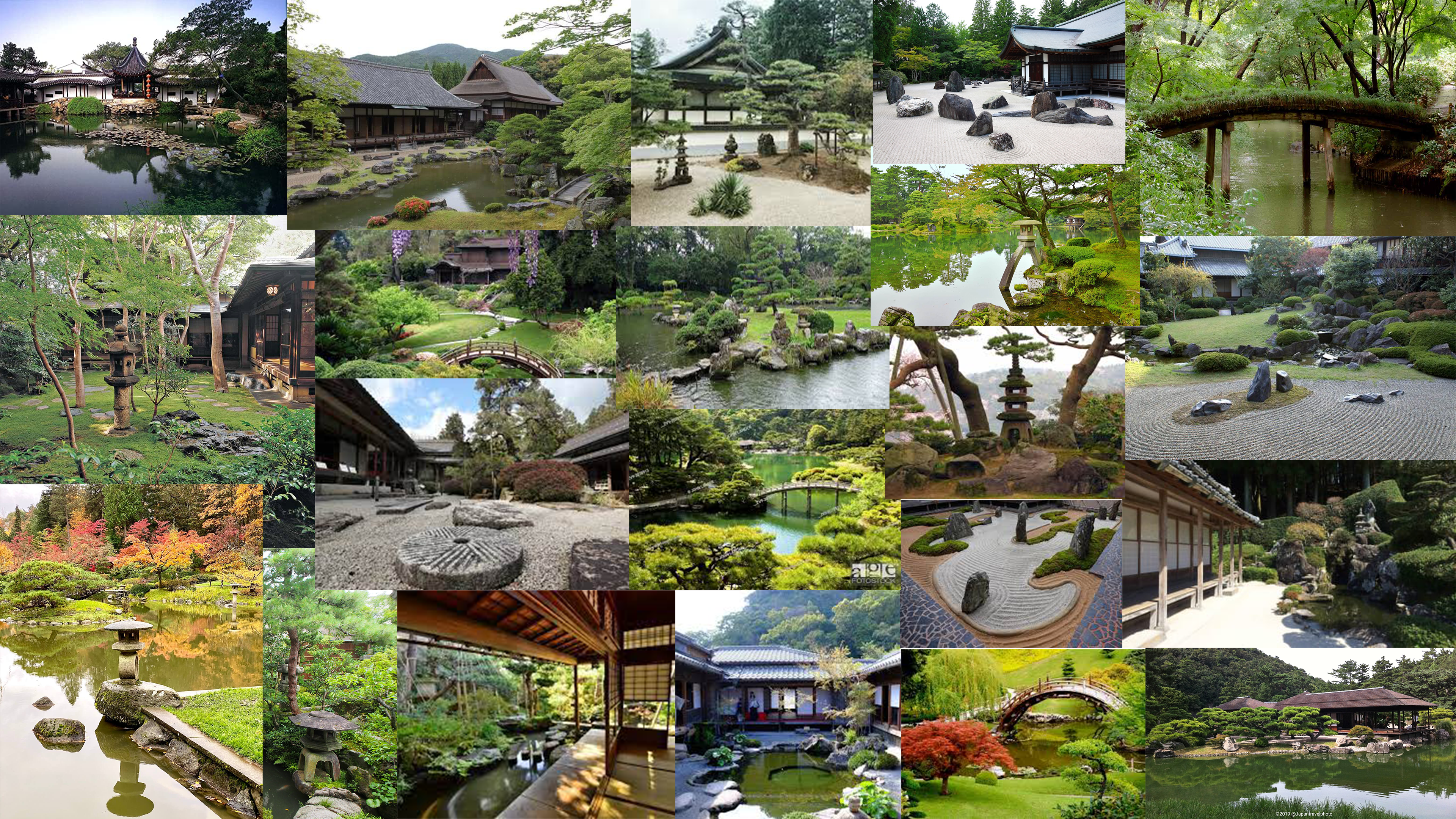
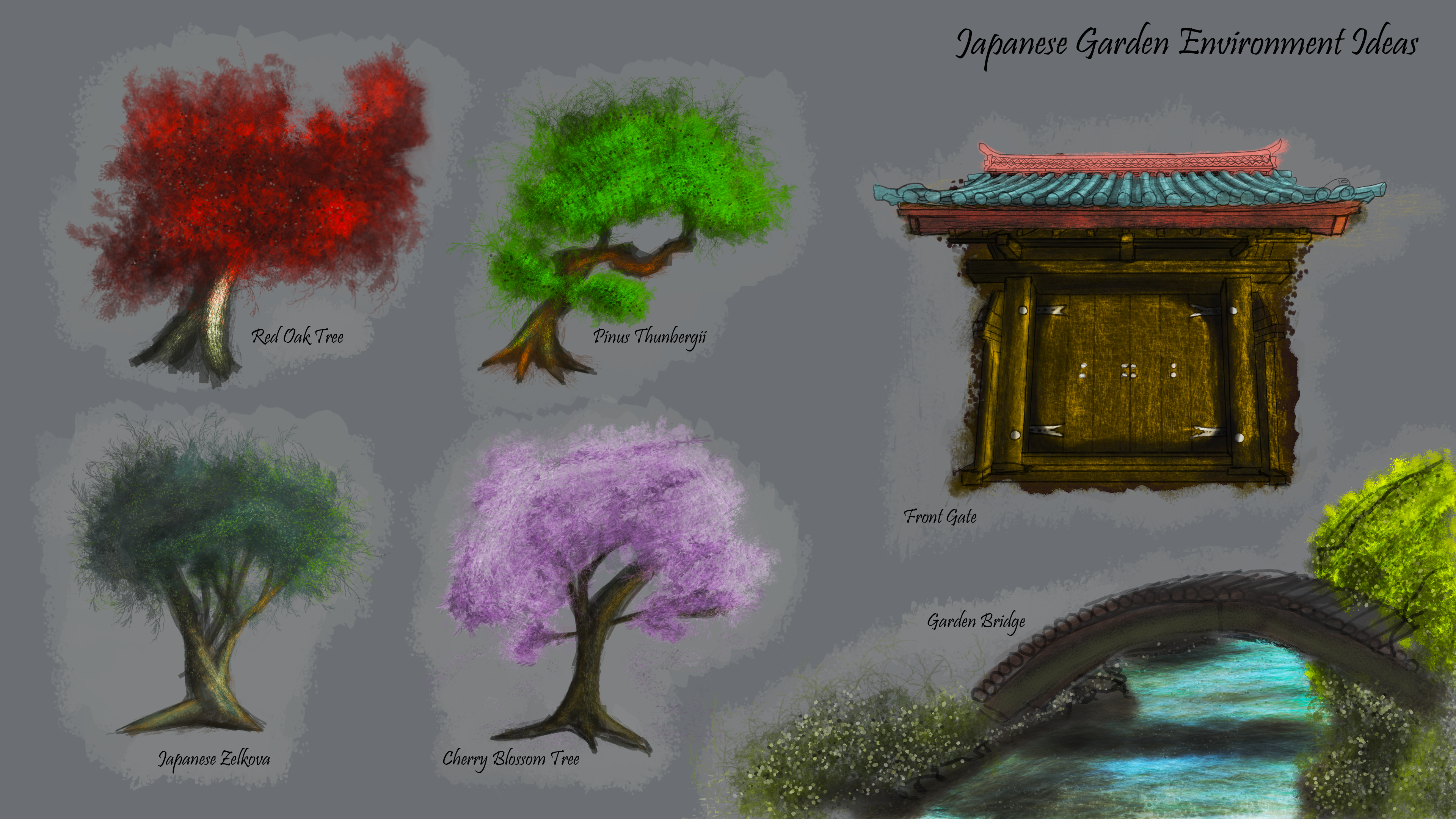
To choose the assets within the garden scene involved a large amount of research for the group. We first investigated the period which we had chosen, the Edo-Japanese period. We then collaborated on these ideas along with our story line. As we chose to incorporate a conflict within the story it was important to reflect this within the assets. This can be most clearly seen with the weapon assets which feature traditional details such as the tang bladed, long-shafted weapons which could withstand and inflict substantial amounts of damage. Japanese weapons tend to have ornate blade guards, handle collars and handle wraps – as family weaponry during this period tended to be an heirloom and passed through generations. I researched how the components of weapons, specifically Japanese, fit together and how they were overall forged. This knowledge gave me the ability to create weapons that were realistically possible. The Toro lantern needed to be researched thoroughly as they come in a vast variety of shapes with differing features. I chose the Toro lantern as it linked well with all aspects of the concept. It shows tranquillity, tradition and by using decals, it shows the pain and conflict of the story line. Other assets created within the group such as the gong and vase also do this, and all assets allowed each member of the group to practice and experiment with new shapes and challenges.
Reflection
The team, for this task, worked extremely well together. As mentioned, the team met and messaged regularly from the moment the task was set, sharing opinions, helping one another, and sharing skill sets. This ensured that there was effective communication throughout, which was successful and integral when looking at the finished environment. A subsequent byproduct of effective communication meant that all facets of the task were planned meticulously. Each task was managed with little dissatisfaction or too much difficulty. As the group spent hours upon hours creating, discussing, and supporting each other, we developed professional relationships built on trust and comfortability. This allowed us to give constructive feedback regularly on each other’s assets. We could then continuously improve our work and were able to see aspects we would not have seen if we had worked independently.
To further improve the environment, I would refine the details further. I would choose even higher quality assets and improve the outside of the scene which would then make the environment even more realistic. An example of how this could be done would be creating houses on fire in the background, changing the lighting further to affect the mood of the scene and to indicate terror and conflict in the background behind the garden. With more time there could have been more assets added to improve the scene and add further intricacy to the design. Smaller more trivial assets could be added as heirlooms linking the environment more closely to the story and allowing the player to add depth and knowledge to the experience. Additional to this, a larger variety of armour could have been created to create a more diverse environment. Currently, the environment shows clear positions of the assets and only in some areas such as the fence and the blood across the lantern can the conflict be seen clearly. This could be accentuated further with the insertion of more props within the environment. To further the design, I would add damaged crates and carts to put the garden in disarray from the violence and conflict it has already seen.
When discussing the idea, the team originally discussed creating a sci-fi inspirated environment. This would have been more beneficial to my technical and design passions and skill set. As an interest, sci-fi would have seen me even more engaged and inspired to create a larger variety of assets. I would have created different and more theme appropriate asset designs which would have been bigger, more angular, and intricate. This theme would be the complete opposite to our current theme, and I would have made assets with more clean lines and a paler palette. I would accentuate through neon-blue lights and brightly coloured lasers. This high-tech theme would have secured more detailed sketches as my imagination in this area is far vaster.